

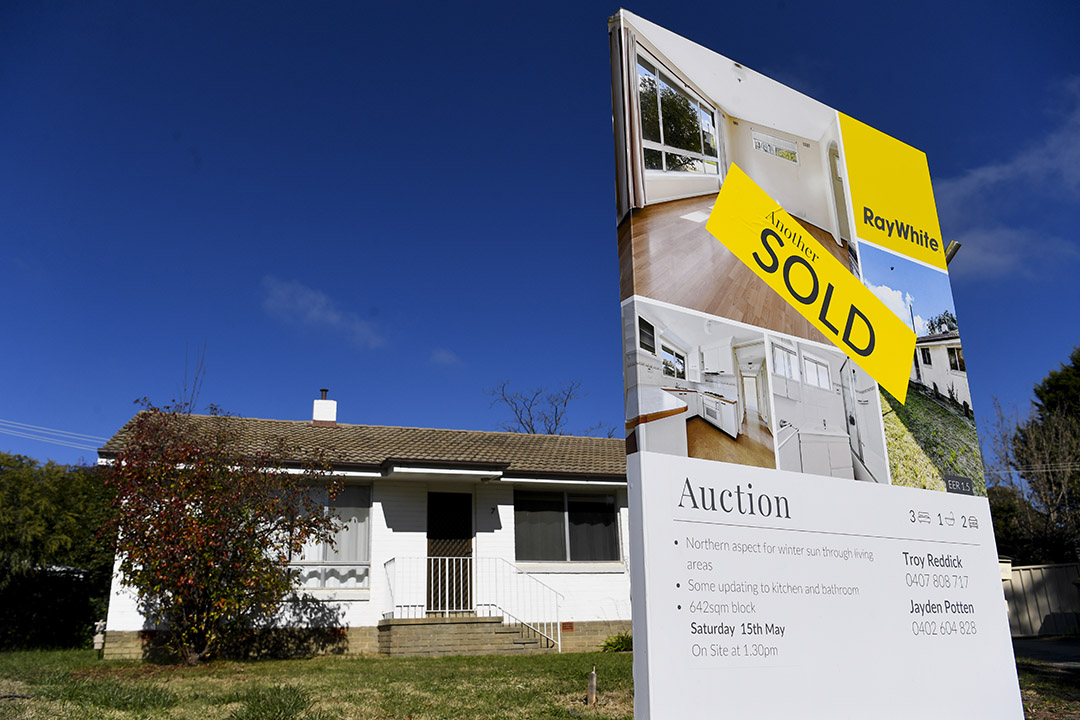
Rumours of changes to the capital gains tax (CGT) discount have been floating ahead of the federal budget in May, sparking debate among investors, property groups, tax and policymakers. Though no formal policy has been announced, leaks and ongoing discussions within government, think tanks and unions suggest scaling back the current 50% discount is on the table and the implications could be significant. But what does this mean? Why might it be done? What changes may occur? And how will this impact investor.
What Is The Capital Gains Tax?
The CGT is a tax on profits (gains) made when selling an asset (capital). Such as an investment property (primary place of residence is exempt).
Introduced by the Hawke-Keating government in 1985, with the aim of reducing reliance on income tax, increasing the breadth of the tax system and tax avoidance through shifting and to restore fairness into the tax system, as he said in a 1989 question in parliament that prior to his introduction of the tax there was “a whofle tax avoidance industry which tried to turn all forms of income into capital gains type income so as to escape taxation.”
The latter reason was central to at the Keating’s philosophy. So, unlike a lot of other countries, income from capital gains in Australia is treated like any other form of income and taxed at the marginal income tax rate as opposed to seperate tax brackets or a flat tax.
What Is The Capital Gains Tax Discount?
The cost-base was originally indexed so that it would only tax the real gains and protect it against inflation but this changed under Howard Government. In 1999 PM John Howard froze indexation and introduced a 50% discount on assets held for more than 12 months, a cry to his predecessor John Hewson’s “Fightback!” program. This also included a 33.3% discount for corporations and super funds but that was abolished for corporations in 2001.
Why Rumours Are Surfacing Now
In the lead-up to the May federal budget, a series of leaks and commentary from policy circles have suggested the government is considering changing the CGT discount. Potentially reducing it from 50% to something closer to 33% or 25%.
The discussion isn’t happening in a vacuum:
- A Senate inquiry into the operation of the discount is currently underway, with a report due sometime next month.
- Unions and policy advocates are calling for adjustments to improve housing affordability and to restore fairness to the tax system and reduce what they see as disproportionate benefits accruing to higher-income investors.
- Some think-tanks and economists have argued that scaling back the CGT discount could generate revenue and rebalance incentives in the housing market.
Importantly however, no policy has been announced, and even Treasury and Cabinet ministers have been tight-lipped when asked about specific changes.
Potential Changes To The Discount
Though there has been no confirmed changes or plans from the government. Potential plans and changes can be speculated from what have been advocated and tried before. In terms of likeliness:
- Scaling back of the discount: a decrease of the discount to either 33.3% or more likely 25%. For the latter, this would change the top rate from 23.5% to 35.25% (excluding medicare levy surcharge).
- Return to indexation: back to the Hawke-Keating system where the cost-base would be indexed. This it to ensure protection against inflation and that only real gains are taxed.
- Limiting the number of properties the discount applies to: the Greens have previously advocated for the 50% discount applying to only 1 investment property before once again being taxed at full marginal rate.
- Seperate tax bracket/s: changing the tax from being treated as any other form of income to being taxed separately. This would be done either as a seperate flat tax like in Sweden or seperate brackets like in the US and UK.
The change most likely to be seen is a reduction of the discount to 25%. This was what former Labor leader Bill Shorten campaigned on in the 2016 and 2019 federal election. This is also supported by Senators Pocock, Lambie and Payman. The Greens are currently advocating for a return to indexation, as the sole balance of power in the senate any changes would have to be supported by them. Other details like the timeline and grandfathering arrangements would also have to be discussed.
Potential Impact on Investors and Markets
1. Higher tax bills for asset sales
Investors would pay more tax on gains, particularly in property and shares where gains have been strong in recent years.
2. Potential investor sell-offs
Some analysts warn that changes to the discount could trigger asset sell-offs, particularly in property markets, as investors seek to lock in profits before changes take effect.
3. Housing market dynamics
Advocates argue that reducing the discount could dampen speculative demand in property, potentially improving housing affordability. Critics counter that it may reduce supply, as landlords hold assets longer or exit the market, which could put further pressure on rents.
4. Broader investor confidence
Tax changes, especially ones large enough to affect after-tax returns, can impact market sentiment across shares and property, affecting valuations and risk appetite.
Why Might It Be Done?
1. Restoring ‘fairness’ to the tax system
Essentially a return to capital gains being taxed just like any other form of income. Advocates argue why should work and labour be taxed twice as much as capital and ownership. Analysis also shows that “the richest 1% of income earners will get a staggering 59% of the benefit from the CGT discount this financial year, rising from previous analysis 54%.”
2. Raising revenue for the budget
PBO analysis shows that the discount will cost $247 billion over the next decade.
3. Take pressure of the housing market
Housing affordability remains a central political issue. Critics argue the CGT discount boosts investor demand by improving after-tax returns, particularly when combined with negative gearing.
Reducing the discount could dampen speculative demand and ease price pressures at the margin. However, the impact is uncertain. If investors exit the market, rental supply could tighten, potentially pushing rents higher.
Ultimately, outcomes depend less on tax changes alone and more on how they interact with planning, supply, the negative gearing concession interest rates and demographic trends.
Political and Policy Considerations
Ultimately, any change to the discount would depend on the government’s appetite to introduce it and the Greens willingness to back it in the Senate. In practical terms, reform would need to originate with Labor in the House of Representatives. In the Senate, it would depend on the Greens willingness to back Labor. Labor with 29 seats and the Greens with 10 seats, combined hold a working majority (39/76). Meaning legislation could pass if the Greens were fully supportive. However, that support cannot be assumed to be automatic or unconditional, and any proposal would likely involve negotiation.
The rest of crossbench is fragmented, with is no clear majority of who’d reliably back a reduction in the discount. Presently, Senator Pocock and Senator Lambie have together previously advocated for a reduction in the discount to 25%. Senator Payman has done the same advocating for a 5% annual reduction over 5-years. Senator Thorpe has also advocated for a change to the discount but without specifying what to.
The 4 senators of One Nation, UAP Senator Babet and Senator Tyrell have neither publicly supported or opposed any change. And the coalition remains opposed to it.
This gives the government a healthy majority of at least 43 senators whilst only needing 39.
In short, while the numbers suggest reform is arithmetically possible, with Labor and the Greens holding a majority and another 4 crossbenchers likely to support, its passage would ultimately depend on political timing, internal party discipline and how aggressively the government is prepared to pursue tax reform in a sensitive economic environment.
Though the government hasn’t officially ruled out any changes, Deputy PM Marles has come out and said in an interview that the tax arrangments hasn’t changed.