A Fortnight That Redefined Tesla
Late January marked a clear inflection point for Tesla’s identity. The company confirmed it will wind down production of the Model S sedan and Model X SUV by mid 2026, ending some of its longest running nameplates after more than a decade.
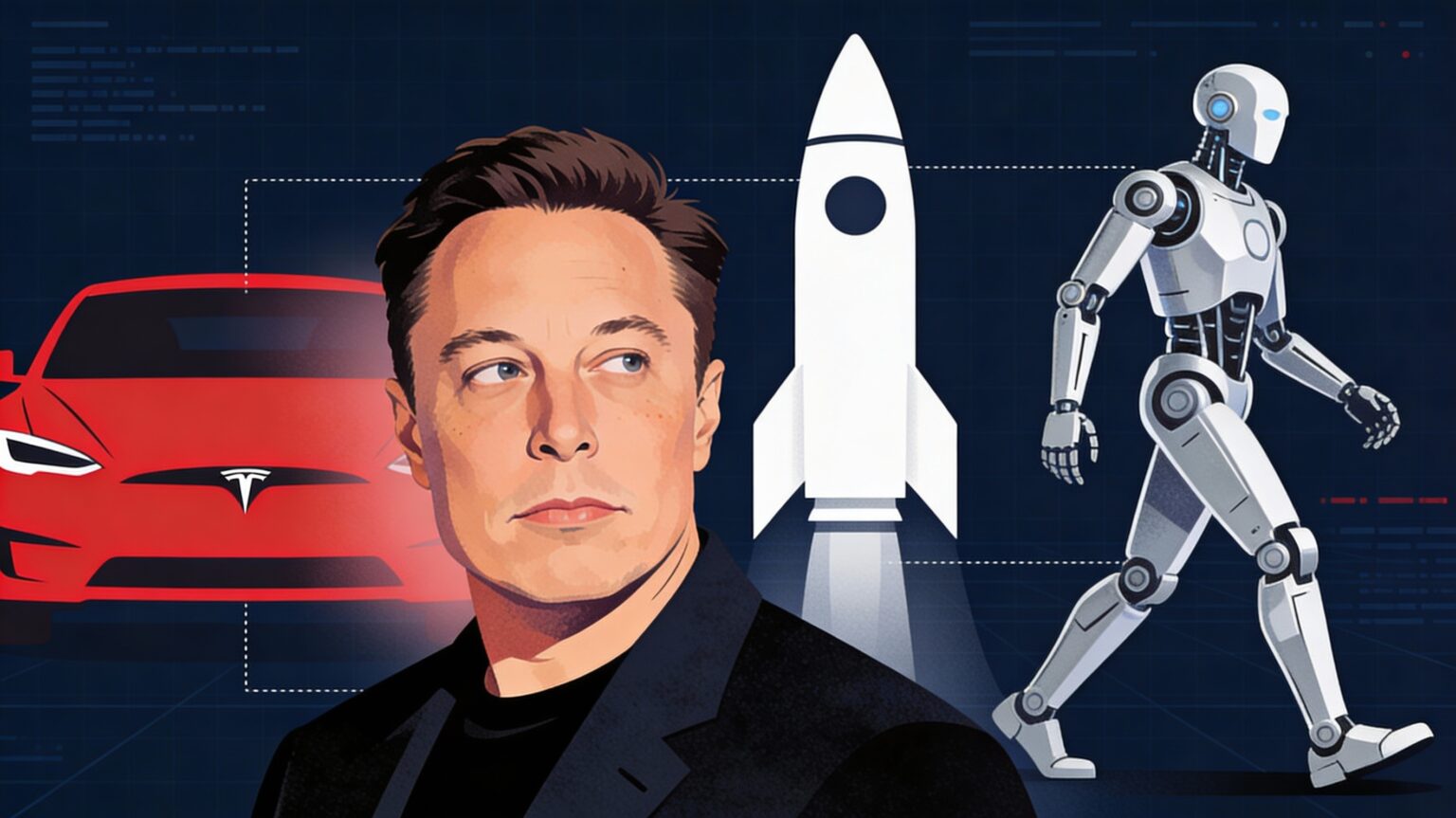
Those production lines at Fremont, California will be repurposed to manufacture Optimus humanoid robots. The decision makes explicit what investors have long suspected. Tesla is no longer positioning itself as a premium electric vehicle manufacturer, but as a real world AI and robotics platform.
On the latest earnings call, Elon Musk described the exit from Model S and X as honourable, while framing it as necessary to support Tesla’s transition toward autonomy and physical AI. Existing owners were promised long term support. Markets heard something else. The future growth narrative now sits firmly outside traditional vehicles.
From Cars to Labour, The Optimus Pivot
Tesla’s Optimus program has moved from concept theatre to industrial ambition. First unveiled in 2021, the humanoid robot is now in its third generation prototype phase, with internal targets pointing to volume production from 2026.
Musk has repeatedly argued Optimus could become the largest product ever built. That claim underpins Tesla’s strategic pivot. The Fremont factory will be retooled to support mass production of robots rather than low volume premium cars.
Behind the scenes, Tesla’s AI leadership has signalled that 2026 is critical. Robotaxis in multiple cities, early industrial deployment of Optimus, and a valuation framework centred on AI rather than vehicles are all expected to converge. Musk’s revised compensation structure reinforces this pressure, with incentives now tied more closely to autonomy and robotics outcomes than EV delivery growth.
For investors, the bet is clear. Near term disruption and margin uncertainty are being exchanged for exposure to a speculative but potentially massive new labour category.
Optionality Versus Execution Risk
This shift raises familiar questions for public market holders. Retiring ageing, low volume models frees capital and talent. It also risks destabilising earnings during a period of heavy transition.
Tesla is effectively asking shareholders to underwrite a long dated option on general purpose robotics. Success would be transformative. Failure would expose how much of the legacy business has already been hollowed out.
Musk Inc and the Mega Merger Trial Balloon
Overlaying Tesla’s operational pivot is a second, more complex storyline. Reports suggest Elon Musk is exploring ways to consolidate parts of his corporate empire ahead of a potential SpaceX listing later this year.
Two broad structures are being discussed. One would involve a combination of SpaceX and Tesla. The other would fold xAI, which controls the Grok chatbot and the X social platform, into SpaceX prior to an IPO.
Recent legal filings in Nevada, including the creation of entities such as K2 Merger Sub Inc, have added fuel to speculation. While no transaction has been confirmed, the legal groundwork appears deliberate. Strategically, the concept is not new. Musk has openly discussed tighter integration between his companies for years. Capital flows have already blurred boundaries, with both Tesla and SpaceX committing multi billion dollar investments into xAI to accelerate compute and model development.
Strategic Logic or Concentration Risk
From a strategic perspective, the logic is coherent. A vertically integrated ecosystem spanning rockets, satellites, vehicles, robots and consumer AI could unlock powerful synergies in data, hardware and distribution.
Starlink connectivity, Tesla’s manufacturing base, and xAI’s models would theoretically reinforce one another. Valuation would shift from sector specific metrics toward a unified real world AI narrative. However, consolidation would materially increase risk concentration. Tesla shareholders could inherit exposure to SpaceX IPO dynamics and regulatory complexity they do not control. Earnings volatility would likely rise, not fall.
Execution bandwidth is also a concern. Tesla is sunsetting legacy products, retooling factories, scaling robotaxis, industrialising humanoid robots, while Musk simultaneously navigates merger discussions and an IPO process. That is an aggressive agenda, even by Musk’s standards.
Read More
What This Means for Investors
The last few weeks have clarified the investment proposition. Tesla is no longer best viewed as an EV company with AI optionality. It is a high beta, high conviction bet on autonomy, robotics and physical AI.
The retirement of Model S and X is symbolic. Capital, engineering talent and management focus are being redirected toward software, robots and autonomy, even if that compresses vehicle volumes.
Any SpaceX, Tesla or xAI consolidation would push this logic further. Investors would effectively own a slice of a Musk centric AI conglomerate, where cars, robots, rockets and chatbots are simply different deployment layers of the same intelligence stack.
For The Investor Standard reader, the key takeaway is structural, not tactical. Buying Tesla today means owning less of a carmaker and more of an ambitious, capital intensive, real world AI experiment. The upside is extraordinary. The complexity and volatility are rising just as fast.