
The Spin-Off That Changed Everything
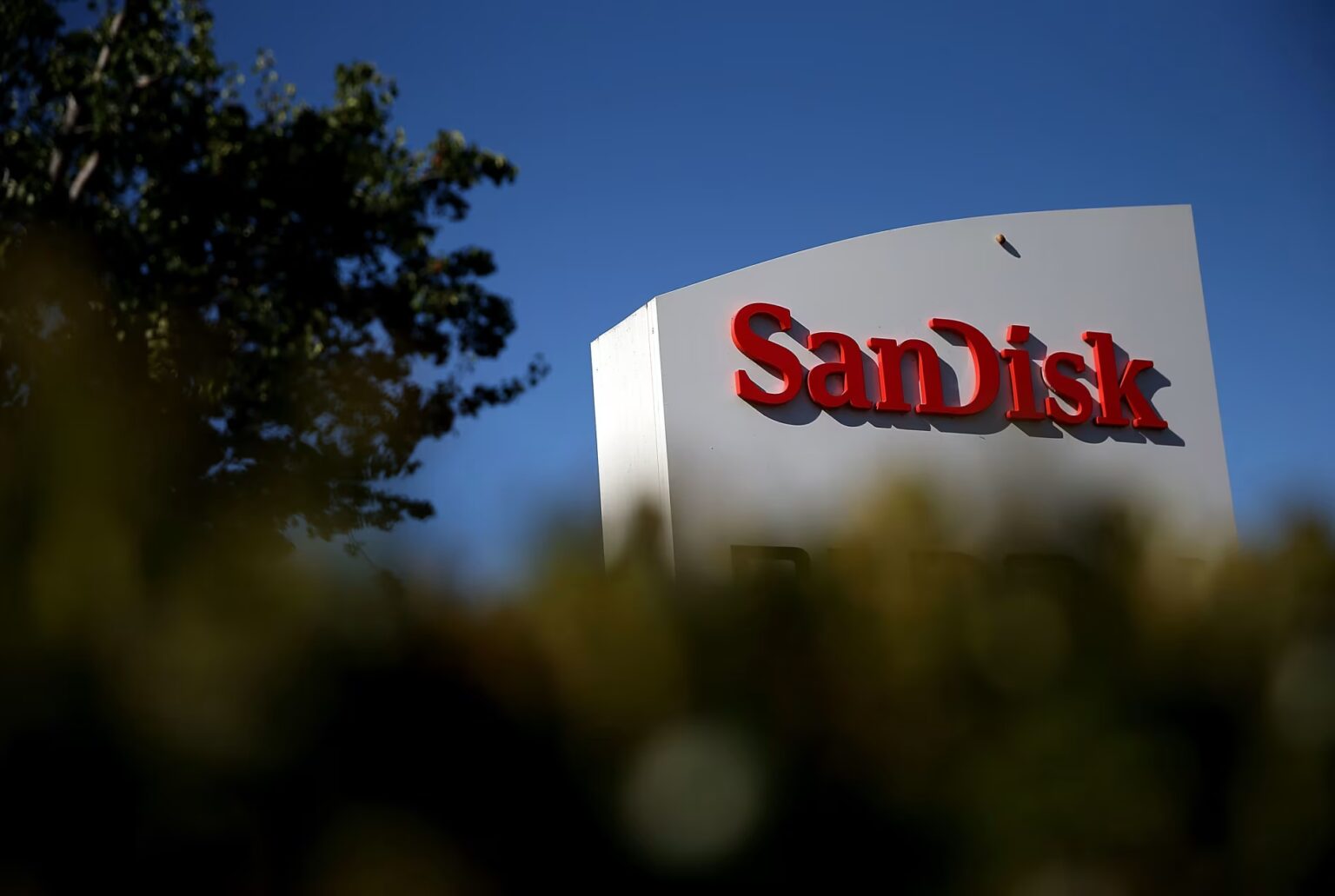
Until early 2025, SanDisk operated as a division of Western Digital, where its performance was weighed down by the parent’s slower-growing hard disk drive segment. In February 2025, Western Digital executed a tax-free spin-off, listing SanDisk on the Nasdaq under the ticker SNDK. Removed from the drag of the legacy HDD business, SanDisk emerged as a pure-play NAND flash company, making it far more appealing to investors targeting high-growth memory markets. Activist shareholders had long pushed for this separation to unlock value, and the outcome validated their case, with the stock debuting around $38.50 and rising rapidly thereafter.
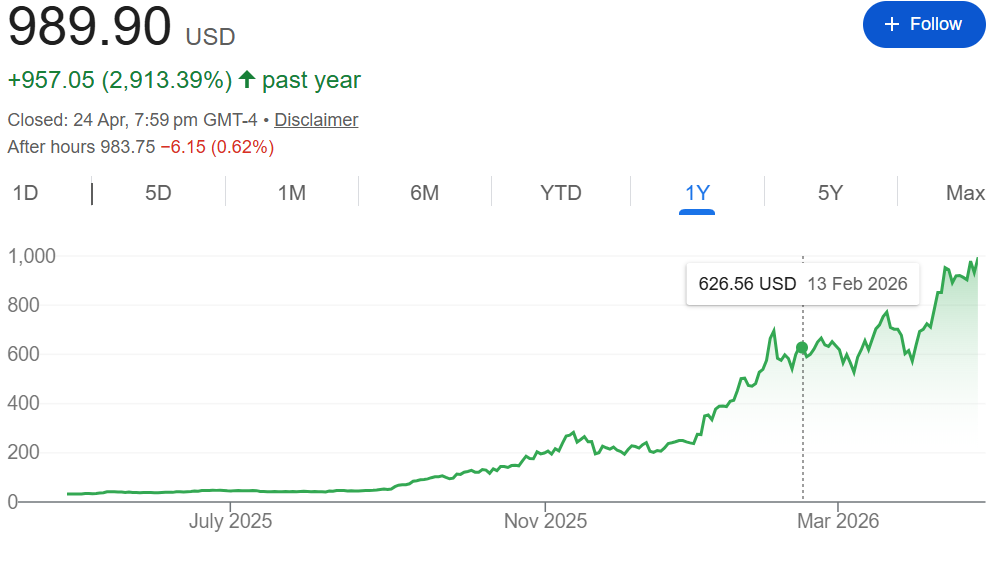
By the end of 2025, SanDisk’s share price had surged more than 550%, making it the top-performing stock in the S&P 500. The spin-off enabled management to concentrate fully on advancing flash technologies, particularly BiCS8 NAND and high-bandwidth flash solutions, positioning the company at the heart of the expanding AI infrastructure landscape.
The AI Memory Supercycle
The AI boom proved to be the key catalyst. As generative AI systems shifted from training to real-world inference, data center operators realised that memory, not processing power, had become the primary constraint. While GPUs from Nvidia deliver the computational muscle, they depend on high-speed storage to continuously feed data. In this environment, SanDisk’s enterprise-grade SSDs effectively served as the backbone for managing and retrieving massive AI datasets.
Surging demand from hyperscale players such as Amazon, Microsoft, and Google drove NAND flash prices sharply higher. SanDisk’s manufacturing facilities operated at full utilisation, yet customers still paid premiums of 30–50% to secure supply. Its joint venture with Kioxia provided a structural cost advantage, allowing the company to expand margins even without significant increases in output. By fiscal Q2 2026, revenue had surged 61% year over year to $3 billion, while earnings increased fivefold. Gross margins improved from 22.5% to 26.2%, and the company returned to positive operating income for the first time in several years.
Tight Supply and Rising Prices
The NAND flash market slipped into a pronounced supply crunch, as years of underinvestment by major players like Samsung and Micron Technology left global capacity tight just as demand from AI, cloud computing, and storage-intensive smartphones accelerated. SanDisk took advantage of this imbalance by significantly increasing prices on its enterprise SSDs and securing multi-year, fixed-price agreements with hyperscale customers, effectively locking in higher margins.
The narrative of scarcity quickly sparked a wave of speculation. Institutional capital flowed in, analysts pushed price targets toward $1,000 per share, and momentum-driven funds further intensified the rally. By April 2026, SanDisk’s stock was trading close to $990, representing an approximately 3,000% surge from its post spin-off listing price.
Financial and Strategic Reinvention
Beyond favourable market conditions, SanDisk delivered a clear strategic turnaround. The company reduced costs, streamlined its operations, and sharpened its focus on high-performance NAND solutions tailored for AI, gaming, and mobile applications. As a result, data centre–related sales doubled to 12% of total revenue, while the firm also began exploring next-generation, AI-optimised storage architectures that more tightly integrate compute and memory capabilities.
At the same time, SanDisk’s market identity evolved significantly, from being viewed as a consumer-focused “USB drive maker” to a critical enabler of AI infrastructure. This repositioning drew interest from long-term institutional investors and even sovereign wealth funds seeking exposure to the semiconductor backbone supporting the growth of AI.
Risks and Sustainability
Despite its meteoric ascent, SanDisk faces mounting concerns around cyclical risk. The memory industry has a long history of swinging between shortages and oversupply, and a moderation in AI-driven demand or a rapid increase in output from competitors could put significant downward pressure on prices. With valuation multiples already stretched, any slowdown in spending by hyperscale customers could quickly trigger a market correction.
That said, the broader structural drivers, ranging from AI adoption and edge computing to ongoing data centre expansion continue to support strong long-term demand for high-speed storage. SanDisk’s early-mover advantage, cost efficiency, and successful brand repositioning leave it well placed to remain a key beneficiary of the evolving memory supercycle.
Disclaimer
The Investor Standard provides general information for education and research only. It is NOT personal advice, a recommendation, or an offer to buy/sell any security. This content has been prepared without taking into account your objectives, financial situation or needs. Past performance is not indicative of future results. Before acting on any information, consider its appropriateness and seek independent advice from a licensed financial adviser.