

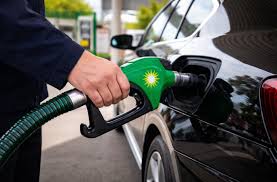
The government has cut the fuel excise for the entire the second quarter of 2026. But what is the fuel excise? What is its history? Why has it been done? And how will it affect you?
What is the Fuel Excise?
The fuel excise is a levy charged per litre on petrol and diesel collected from fuel producers and importers. Producers and importers pass this cost on to consumers through the pump price, making it effectively a consumption tax.
Introduced in 1929 to fund road maintenance and construction, operating as a fixed per-litre charge adjusted periodically. A similar excise on diesel for road users was introduced in 1957 with exemptions for off-road users, and in 1982 the Diesel Fuel Rebate Scheme for off-road users replaced the exemptions. Liquefied Petroleum Gas (LPG) and ethanol were made duty free in 1979 and 1980 respectively, to encourage their use.
The government introduced biannual indexation so that the excise increases twice a year from 1983 to maintain its real value. This shift reflect a move toward base broadening rather than maintaining a direct link to road expenditure, which it formally abandoned in 1992.
Indexation was frozen in 2001 in response to rising oil prices and public backlash with another 10% to fuel prices. The excise then remained fixed at 38 cents until the government reintroduced indexation in 2014 as a budget repair measure, and it has remained in place since.
Amid a spike in oil prices following the Russian invasion of Ukraine in February 2022, the government halved the fuel excise for six months, from March to September, to ease cost-of-living pressures.
As part of the 2025 election campaign, the Liberal Party proposed halving of the fuel excise for a year.
Why has it been done and How will it affect you?
After US strikes on Iran, Iran effectively closed the Strait of Hormuz, pushing global oil prices up. That flow-on effect drove up prices domestically, leading the government to temporarily halve the fuel excise to ease cost-of-living pressures.
Reducing the excise should reduce fuel prices at stations as producers and importers will pay a reduced tax and that will be seen with reduced pass on prices. Price reduction as take weeks to be seen at stations as they’re still going through the stock they paid the full excise on.
This means filling up a 65L tank still cost $17 less. With the average household fuel consumption of 35L a week over the 3 months $120 will be saved.
This will also reduce government revenue by over $2.5 billion. “The cost of what we are announcing today is $2.55 billion, depending, of course, on the amount of demand in the system over that three-month period.” Treasurer Jim Chalmers said.
What else is being done?
The government has also reduced the Heavy Vehicle Road User Charge to zero for three months. And will also defer the next scheduled increase in the Heavy Vehicle Road User Charge by six months.
The ACCC has also been tasked with monitoring fuel prices and laws against price gouging have also been passed which will be important in translating the reduction of the fuel excise into the reduction of prices at the pump.
On a state level, the Victorian and Tasmanian government have made public transport free. State and territory leaders have also agreed to return the GST windfall which will save Australians an additional 6 cents.
On the supply side, the government has:
- Appointed a national Fuel Supply Taskforce Coordinator and Taskforce
- Released 20 per cent of Australia’s petrol and diesel fuel reserves, targeted at regional areas
- Changed fuel standards to get more fuel flowing
- Changed diesel standards so Australia’s refineries can supply more diesel
- Engaged with international partners to keep supply flowing, including securing a supply agreement with Singapore.
What happens now?
Though President Trump was confident going into the war and then confident in reopening the strait, it is unknown how long this war will last or how long the strait will remain closed for. As stations are going through their stock and buying new stock, their savings should be reflected in a lower price at the pump.