

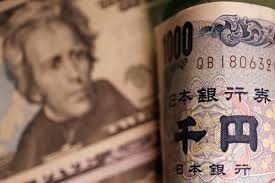
The Japanese yen has become one of the most closely watched prices in global markets, not because it’s a barometer of Japan alone, but because it’s a pressure valve for global risk-taking. Since the collapse of Japan’s asset bubble in the early 90’s, Japan has had very low interest rates, set by the Bank of Japan. That made the yen one of the cheapest currencies in the world to borrow. This makes it so when the yen weakens sharply, it can reprice everything from Asian FX to global equities via the carry trade as Japan’s an export-driven economy. When it strengthens suddenly, it can trigger violent position unwinds.
This dynamic explains why even modest shifts in the yen can have outsized effects. Unlike most currencies, the yen sits at the centre of leveraged global positioning, so volatility is rarely contained. As rate differentials widen and uncertainty lingers in the face of Japan’s new PM, Sanae Takaichi and her plans for major changes. Markets are increasingly sensitive not just to where the yen trades, but to how fast it moves and what that implies for intervention risk.
The market will focus on 1 key question: will Tokyo and the BoJ step in? And if it does, will it matter?
What Triggered the Latest Yen Intervention Speculation
Speculation escalated after US authorities conducted a “rate check” on the Yen, a technical step that involves gauging market conditions should they decide to conduct transactions in fx markets. While there has been no confirmation of actual USD-JPY trades, the move alone was enough to ignite some curiosity and concern in the market.
The yen strengthened rapidly in response, with the dollar falling around 1.7% in a single session, its largest one-day decline in months. That reversal followed a period of sustained weakness in which the yen had slid close to 160 per dollar, down from around 147 late last year. For markets, the signal was clear, tolerance for disorderly moves and volatility might be thinning.
Why Has the Yen Been Under Pressure
Wide interest-rate differentials has been the main driver of Yen weakness. Even as the BoJ has begun edging away from ultra-loose monetary policy, which it has held for decades with large amounts of QE and a 0 interest rate policy which later moved to negative in 2016 to 2024. But yields in the US and elsewhere remain significantly higher. That gap encourages carry trades, where investors borrow cheaply in yen to invest in higher-yielding assets abroad.
At the same time, uncertainty around the pace of Japan’s policy normalisation and continuing of its decades-long ultra-loose monetary policy has left the currency exposed. The BoJ has been cautious in tightening financial conditions, mindful of fragile growth and Japan’s heavy debt burden. As a result, the yen has become particularly sensitive to US data surprises and shifts in global rate expectations. But after decades of sub-2% and sub-1% inflation and deflation, Japan’s inflation hit numbers not seen in decades. With it relatively high YoY of 2.9% in November. This has led the BoJ to raise interest rates to 0.75%, the highest seen since the early 90’s.
Importantly, Japanese officials have repeatedly emphasised that they are watching volatility, not targeting a specific exchange rate. Sharp, rapid, one-way moves rather than gradual depreciation is what typically raises the risk of official action and intervention.
How Currency and Yen Intervention Works
In Japan, the Ministry of Finance conducts Japanese currency market and yen intervention, with the BoJ acting as the executor. In the US, the Treasury Department holds similarly, using the Exchange Stabilisation fund to intervene in foreign currency markets which it does through engaging in the buying and selling of foreign currencies.
Interventions like these are rare and are typically aimed at calming disorderly and volatile markets rather than reversing long-term trends. Historically, intervention has been most effective when it aligns with broader fundamentals or is coordinated with other policy signals. Alone, interventions tends to just delay rather than permanently shift direction or stabalise.
Japan has shown a more willingness to act than the US in recent years, stepping into markets in 2024 when the yen weakened to similar levels, an effort that helped slow the currency’s decline.
Why the US Cares About Yen
While US officials have offered little explanation as to why they conducted the rate check, markets have been left to infer potential motivations. One possibility is that the Trump administration prefers a weaker dollar overall, particularly against Asian currencies, to support U.S. manufacturing competitiveness. A sharply weakening yen would run counter to that objective.
Others have pointed to geopolitical considerations. Japan’s new prime minister, Sanae Takaichi, is campaigning on closer security ties with Washington and a more assertive defence posture. Supporting currency stability during a politically sensitive period could help reinforce economic confidence ahead of a snap election. This motive aligns with the recent Treasury intervention in Argentina to boost their Peso, in support of President Milei, a close ally of the US and Trump administration.
Japan’s Domestic Stakes Are Rising
For Japan, yen weakness carries real economic and political costs. Japan is relies heavily on imports particularly for energy and food, meaning a falling currency feeds directly into higher living costs. Those pressures are reinforced by the government as PM Takaichi is seeking a renewed mandate, promising fiscal support and tax cuts that risks adding to Japan’s already substantial debt load.
Rising bond yields and concerns around fiscal sustainability have weighed on the government bonds, adding another channel through which yen weakness can reinforce itself. Previous interventions suggest authorities are willing to act when depreciation accelerates too quickly.
Why Markets Focus on Intervention Risk
Markets care not because it always succeeds, but because of positioning risk. The Yen underpins a vast network of leveraged trades across a wide range of investments and asset classes. A sudden, rapid and sharp strengthening of the currency, whether driven by intervention or policy surprise can force rapid unwinds, spilling into global equities, emerging-market currencies and volatility products.
Just the threat of intervention alone can be enough to alter behaviour, prompting traders to reduce exposure or hedge aggressively. This dynamic and behaviour helps explain why yen moves often coincide with broader shifts in risk sentiment globally.
What Happens Next
For now, markets see vigilance rather than impending action. Investors will be looking for further official language around excessive or speculative moves, as well as any signs of coordinated buying in thin trading conditions.
Key indicators include the USD–JPY yield spread, FX volatility measures, and any connection or correlation between yen weakness and global equity performance. Failing to meet intervention expectations have been raised could just as easily see the yen weaken again.
The signal may already be in the price. With intervention now anticipated, the next move or lack of a move could matter just as much as any official action itself.