

Introduction
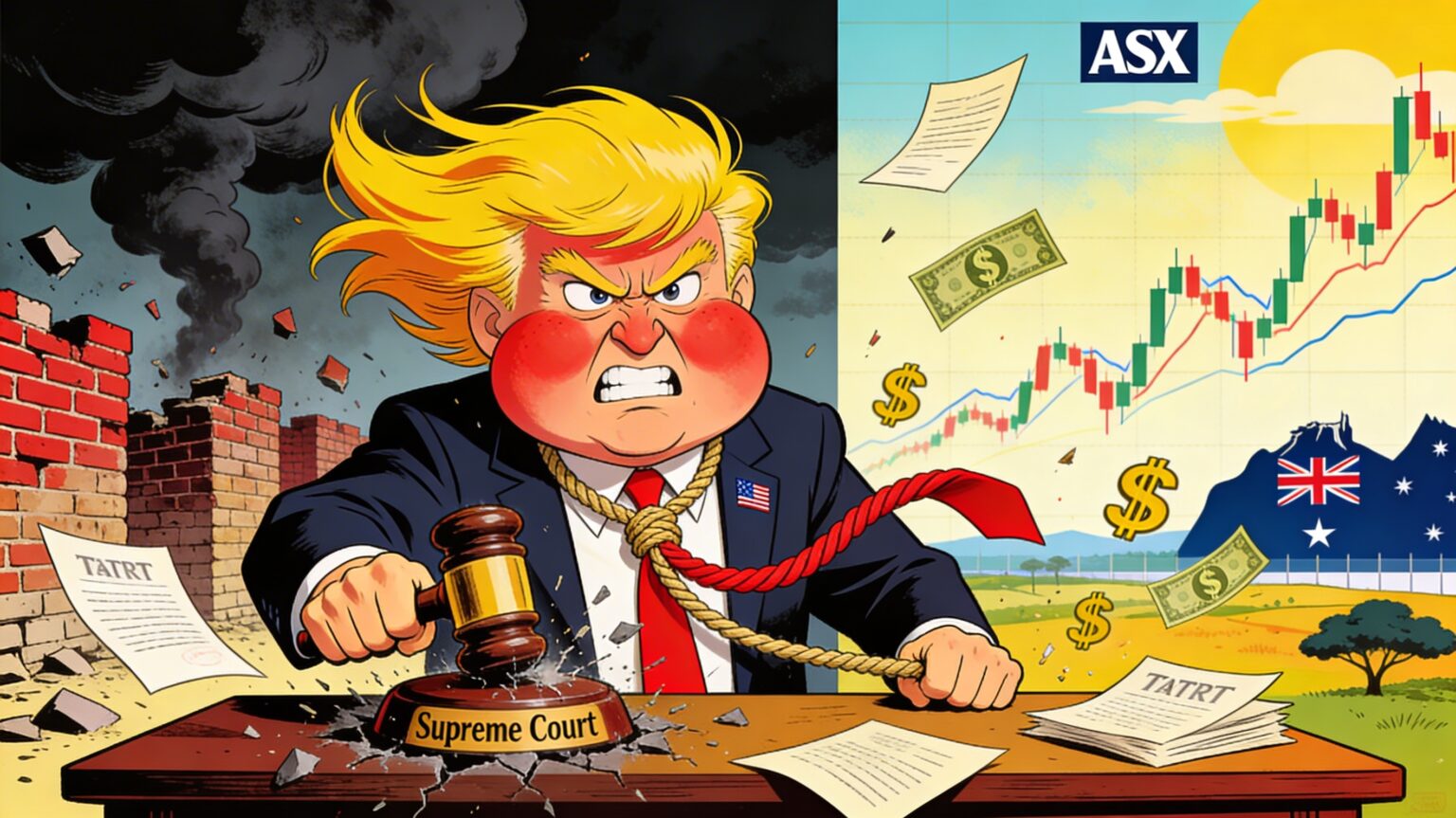
The Trump tariffs Supreme Court ruling has reshaped the global trade narrative. In a 6 to 3 decision, the Supreme Court of the United States ruled that President Donald Trump overstepped his authority when imposing sweeping emergency tariffs on more than 180 countries.
For Australian exporters and ASX investors, this is not just legal theatre. It has real financial consequences. Billions of dollars may now be in question.
What the Court Actually Decided
The ruling focused on the International Emergency Economic Powers Act, known as IEEPA.
That 1970s legislation allows a president to regulate imports during a national emergency. However, the court determined it does not authorise unlimited, open ended tariffs of any size or duration. Chief Justice John Roberts, writing for the majority, rejected the idea that a president can declare an economic emergency and effectively rewrite tariff policy without clear congressional approval.
The decision invalidates Trump’s so called Liberation Day tariff regime. Some duties reached as high as 145% on selected Chinese imports. Even close trading partners such as Australia faced new baseline charges. For markets, this creates both clarity and uncertainty. The legal authority has been curtailed. The financial consequences remain unresolved.
The Refund Question, Why It Matters to Australia
The court did not specify what happens to duties already collected. That omission is critical. More than US$130 billion in tariffs were gathered under the struck down regime. Australian exporters were directly affected.
Since April last year, most Australian goods entering the US faced a 10% baseline tariff under IEEPA. That applied on top of existing product specific duties. Modelling from EY Australia estimates those measures cost local exporters more than A$1.4 billion. Sectors exposed include beef, wine, horticulture, medical devices and industrial equipment.
If refunds are ultimately ordered, that capital returns to company balance sheets rather than remaining in the US Treasury. It will not be automatic. Exporters must lodge formal claims. Documentation will be essential. Litigation could stretch for years. Still, for some ASX listed names, the sums are meaningful.
Trump’s Response, Tariffs Are Not Gone
Investors should not assume trade tensions are over. Within hours of the ruling, Trump announced plans for a new 10% global tariff under Section 122 of the Trade Act. He later flagged the possibility of lifting that to 15%.
Section 122 allows temporary across the board tariffs for up to 150 days without additional congressional approval. Parallel Section 301 investigations are also underway. These can justify more targeted, longer lasting trade measures. In other words, tariff risk has shifted rather than disappeared.
Markets appeared relatively calm because alternative pathways were already visible. The legal setback limits one mechanism. It does not eliminate protectionist intent.
Implications for the ASX
For ASX investors, the impact is nuanced. This is not a simple risk on or risk off event. It is a recalibration of trade uncertainty. Potential beneficiaries include export exposed industrial companies and manufacturers selling into the US. Lower future tariffs could support margins. Refunds would be an additional tailwind.
Agribusiness names in beef, wine and horticulture may also see relief. The 10% baseline tariff had been compressing margins in competitive markets. Logistics and shipping exposures could benefit if global trade flows normalise. However, risks remain. Policy volatility complicates corporate planning. Boards must model multiple tariff regimes simultaneously. Even if refunds are legally justified, administrative processes will be slow and contested.
There is also the risk of retaliatory measures from other trading partners. Trade policy remains fluid.
Read More

Why the Legal Constraint Matters
Beyond the immediate financial angle, the ruling establishes a boundary. The Supreme Court has signalled there are limits to how far emergency powers can stretch in trade policy. For long term investors, that institutional constraint reduces tail risk. It reinforces that Congress retains primary authority over taxation and tariffs.
Markets value predictability. Even partial clarity helps.
How Investors Can Position
The opportunity lies in dispersion. Not every exporter has the same US exposure. Not every balance sheet can efficiently pursue refunds. Investors who analyse tariff sensitivity, product mix and legal readiness will have an advantage. Some companies may quietly strengthen cash positions over time. Others may see minimal benefit.
Macro decisions in Washington can ripple directly into earnings in Sydney. For portfolios with meaningful US revenue exposure, this ruling deserves attention. It may not remove volatility. But it changes the legal foundation of global trade policy. That matters.