


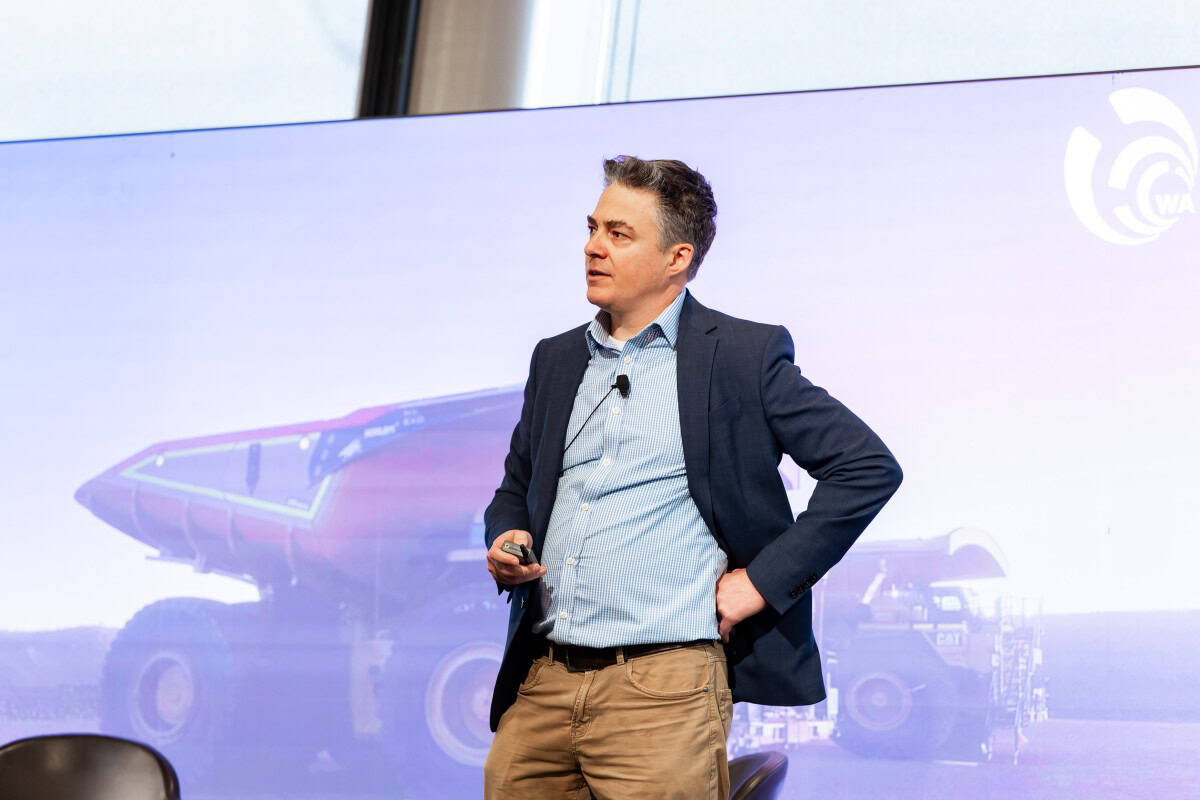
In the first instalment of The Investor Standard’s CEO & Executive Interviews series, our analyst Peter Boyd sat down with Jonathan Fisher, CEO of Cauldron Energy, for what began as a discussion about uranium exploration and quickly evolved into a broader examination of energy policy, market design and Australia’s strategic blind spots.
- A Strategic Operator in a Policy-Constrained Industry
- Exporting Uranium: The “No-Brainer” Australia Won’t Fully Embrace
- The Global Context: Nuclear Is Not a Niche Bet
- Intermittency and the Hidden Cost of the Energy Transition
- Nuclear Safety vs Nuclear Cost
- Capital Discipline and Asymmetric Upside
- Looking Forward
- The Investor Standard View
What makes this conversation compelling is not simply Fisher’s role as a uranium executive. It is the way he connects capital markets, policy distortion and long-term energy security into one coherent framework.
This is not a short-cycle trade thesis. It is a structural one.
A Strategic Operator in a Policy-Constrained Industry
Jonathan Fisher, CEO of Cauldron Energy (ASX: CXU), discusses how his background shapes his approach to the business. Having worked in advisory at Rothschild during the Global Financial Crisis before moving into in-house strategy, and CFO roles, he sees capital allocation as the core discipline of leadership.
I’m more of a strategic financing, strategy kind of CFO as opposed to an accounting and reporting CFO.
Jonathan Fisher, CEO of Cauldron Energy
That distinction matters. Junior resource companies often burn capital chasing optionality. Fisher’s approach is narrower and more deliberate: acquire and define uranium resources cheaply, convert them to JORC-compliant assets, and preserve upside for when regulatory conditions change.
The operating constraint isn’t geology. It’s policy.
Exporting Uranium: The “No-Brainer” Australia Won’t Fully Embrace
Fisher is unequivocal on one issue: uranium exports should not be conflated with domestic reactor construction.
Mining and exporting to those trading partners that need it… that’s a no-brainer. Absolute no-brainer.
Jonathan Fisher, CEO of Cauldron Energy
Australia holds roughly 30% of global uranium resources. South Australia actively supports uranium mining. Western Australia and Queensland maintain bans. The political tension isn’t technical, its ideological and factional.
From an investment perspective, this creates a mispricing.
Cauldron’s Yanrey project currently hosts approximately 55 million pounds of uranium. Fisher outlined the economics:
Last year we discovered uranium at about 8 cents a pound… it gets valued on our balance sheet at about a dollar a pound.
Jonathan Fisher, CEO of Cauldron Energy
In jurisdictions where development is permitted, comparable in-ground uranium can attract valuations closer to $10 per pound.
That tenfold gap is not commodity leverage. It’s regulatory leverage.
This is what makes Cauldron’s positioning unusual among junior miners. The discovery risk is largely mitigated. The rerating catalyst is political timing.
The Global Context: Nuclear Is Not a Niche Bet
Fisher’s conviction rests on a simple macro reality:
The world needs more uranium… global decarbonisation targets are put at risk if there’s not enough uranium around.
Jonathan Fisher, CEO of Cauldron Energy
He frames the nuclear resurgence as being driven by two forces:
- Decarbonisation requirements.
- Energy abundance in an AI-driven world.
Energy abundance is critical in this time of AI growth and electrification of the economy. We need electricity and we need lots of it.
Jonathan Fisher, CEO of Cauldron Energy
This is a critical insight. The nuclear renaissance is no longer just about emissions reduction. It is about power density, grid stability and sovereign resilience.
China is building reactors aggressively and largely on time and on budget. Western nations are restarting reactors and revisiting small modular designs. Even Australia’s AUKUS submarine program quietly embeds nuclear engineering capability into the national industrial base.
The direction of travel globally is clear, even if Australian domestic politics remain unsettled.
Intermittency and the Hidden Cost of the Energy Transition
One of the most technical, and underappreciated, parts of the discussion concerned grid economics.
Fisher argued that the National Electricity Market does not fully price the system cost of intermittency.
I think the true cost of intermittency in a network is not properly costed.
Jonathan Fisher, CEO of Cauldron Energy
Solar and wind have low marginal costs and can bid aggressively in short intervals. But they cannot replace baseload generation because of intermittency.
It can displace, but not replace, because of this intermittency.
Jonathan Fisher, CEO of Cauldron Energy
Wholesale prices can fall when renewable output surges. Retail prices, however, reflect transmission build-out, backup generation, hedging and infrastructure intensity.
Did anyone get a retail bill reduction?… Most retail contracts have kept going up.
Jonathan Fisher, CEO of Cauldron Energy
This is not an argument against renewables. In fact, we explicitly supports diversification:
The key to a resilient grid is an all-of-the-above approach.
Jonathan Fisher, CEO of Cauldron Energy
But his critique highlights a structural challenge: transition policy that ignores system wide costs risks eroding public trust if consumer bills fail to fall.
For investors, this highlights why baseload technologies, storage solutions and grid infrastructure remain strategically relevant.
Nuclear Safety vs Nuclear Cost
On safety, Fisher was blunt:
The industry actually won the safety argument.
Jonathan Fisher, CEO of Cauldron Energy
Modern reactors are fundamentally different from the legacy designs that dominate public imagination. Where the debate becomes more complex is cost and delivery.
Does Industry have issues with delivering on time, on budget? Yes it does.
Jonathan Fisher, CEO of Cauldron Energy
Western nuclear builds have suffered from complexity and regulatory layering. China’s experience demonstrates that modularisation and standardisation materially reduce build risk.
The implication for uranium markets is important: demand growth is real, but execution discipline in reactor deployment will determine the pace of that demand.
Capital Discipline and Asymmetric Upside
Cauldron’s strategy is straighforward but patient:
We run the company on the smell of an oily rag.
Jonathan Fisher, CEO of Cauldron Energy
Drill. Convert to JORC. Add pounds to the balance sheet. Preserve capital. Advocate for policy change.
The valuation asymmetry is what attracts investors.
That asymmetric upside… that’s what people see as a reason to invest.
Jonathan Fisher, CEO of Cauldron Energy
The risk is not whether uranium exists. The risk is how long policy remains static.
Looking Forward
When asked what success looks like in three to five years, Fisher’s answer was direct:
We would be having a policy change in WA.
Jonathan Fisher, CEO of Cauldron Energy
He envisions Yanrey evolving into one of the largest uranmium projects globally and Cauldron transitioning from a lean explorer into a leading uranium developer.
Whether that timeline compresses or stretches depends on political appetite as much as commodity prices.
Read More

The Investor Standard View
This interview reinforces a broader theme we continue to emphasise: markets misprice structural transitions when politics and capital cycles diverge.
Uranium is not simply a commodity trade. It sits at the intersection of climate policy, energy security, AI-driven demand growth and regulatory constraint.
Jonathan Fisher’s central argument is clear: Australia possesses a strategic resource advantage that it has yet to fully embrace.
The question for investors is not whether nuclear demand grows globally. It is whether Australian policy eventually aligns with that reality.
That alignment, when it comes, may not be incremental.