
The market is finally starting to treat the Middle East conflict as an economic event, not just a geopolitical one.
- Why The Market Reaction Suddenly Got More Serious
- Oil Is Not The Only Problem
- This Is What Stagflation Looks Like in Real Time
- Why Gold Is Falling Instead of Rising
- Equities Are Starting to Separate Into Winners & Losers
- The Bigger Issue Is Not This Week’s Price Spike
- What Investors Should Actually Watch From Here
For weeks, investors had largely treated the war between the US, Israel and Iran as something serious but containable. That complacency is starting to break. Oil surged again on Monday, aluminium jumped sharply, equities sold off across Asia and gold, unusually, failed to provide much of a defensive cushion. The move was not random. It reflected a more uncomfortable realisation taking hold across markets: if this conflict drags on and the supply shock deepens, the global economy may be heading into a stagflationary squeeze.
That is a far more difficult environment for investors than a standard risk-off episode.
This is not just about headlines from the Gulf. It is about what happens when a major energy chokepoint is effectively compromised, industrial metals supply is disrupted, inflation expectations rise again and central banks are forced to stay tighter for longer just as growth weakens.
That mix is toxic.
Why The Market Reaction Suddenly Got More Serious
The latest catalyst was the involvement of Iran-backed Houthi militants, who fired missiles at Israel over the weekend and signalled they would continue operations until attacks on Iran ceased. Their entry matters because it adds another layer of regional complexity to a war that was already pressuring global supply chains.
The market’s response was immediate.
Brent crude rose more than 3 per cent on Monday to above US$116 a barrel, extending its advance this month to roughly 60 per cent. That kind of move is not simply a short-term volatility spike. It is the market beginning to price in a more prolonged and disorderly supply disruption.
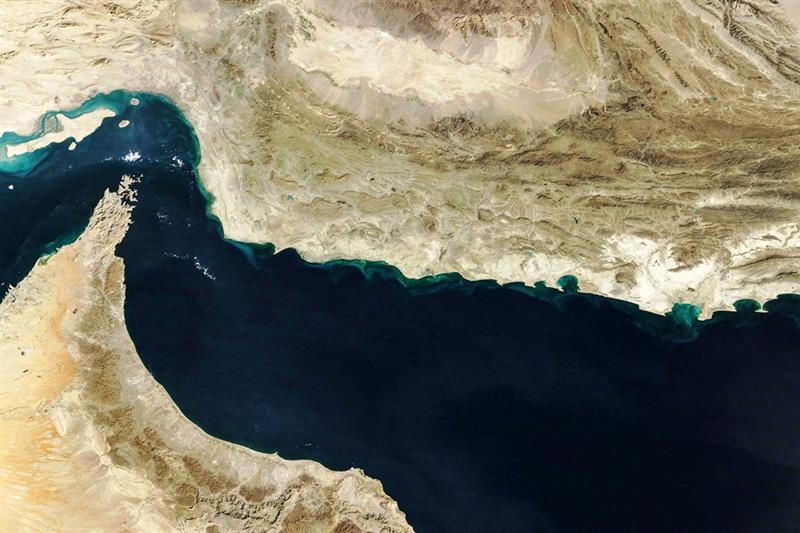
At the centre of it all is the Strait of Hormuz, one of the most important maritime chokepoints in the global economy. Around a fifth of the world’s energy supply moves through it. Once traders start to believe that route is materially compromised, oil does not just rise on fear. It rises because the global system has very few easy substitutes for that volume in the near term.
That is the difference between a headline shock and a structural one.
Oil Is Not The Only Problem
A lot of the initial focus has rightly gone to oil, but aluminium may prove just as important from an industrial standpoint.
Prices for the metal jumped 6 per cent after Iran attacked production sites in Bahrain and the United Arab Emirates. That is significant because the Gulf accounts for close to 10 per cent of global aluminium output, and aluminium is embedded across huge parts of the modern economy. Cars, aircraft, packaging, construction and solar infrastructure all rely on it.
When a commodity like oil spikes, everyone understands the inflation risk. When a metal like aluminium spikes, the effect can be less obvious but no less serious. It flows into manufacturing margins, supply contracts, capital projects and consumer prices with a lag.
That is why reports of panic buying by large car makers matter. They suggest parts of the industrial economy are no longer treating this as a passing disruption. They are starting to secure supply before shortages become more acute.
That behaviour can make price moves worse. Once buyers begin stockpiling, a manageable tightness can turn into a more severe squeeze.
This Is What Stagflation Looks Like in Real Time
The word stagflation gets overused, but this is the sort of backdrop where it becomes relevant again.
Stagflation is one of the hardest conditions for markets to deal with because it breaks the usual playbook. If growth slows, investors normally hope central banks can cut rates. If inflation rises because the economy is overheating, rate hikes at least come with stronger demand. But when inflation rises because of a supply shock while growth is deteriorating, policymakers have far less room to move.
That is the current fear.
Higher oil prices feed directly into inflation. Higher metals prices add a second layer of cost pressure. At the same time, prolonged war, disrupted shipping routes and weakening business confidence drag on growth. The result is an economy facing rising input costs and fading momentum at the same time.
Jonathan Pain’s observation that markets are only now starting to price this properly gets to the heart of it. Investors often lag major macro shocks because they spend the early phase assuming things will stabilise quickly. We saw that during the early stages of COVID. We are seeing a version of it again now.
The problem is that once the market moves from “temporary disruption” to “prolonged supply shock,” asset pricing can re-rate quickly.
Why Gold Is Falling Instead of Rising
One of the more striking features of this move is that gold has sold off even as geopolitical risk has escalated.
At first glance, that looks odd. Gold is supposed to benefit when the world becomes more unstable. But gold is not just a fear trade. It is also heavily influenced by the US dollar and interest rate expectations.
That is the more important dynamic right now.
As oil rises and inflation fears return, markets have scaled back expectations for US Federal Reserve rate cuts over the next year. That has pushed the US dollar higher. A stronger dollar tends to weigh on gold because it makes the metal more expensive in other currencies. Higher interest rates also make non-yielding assets like gold less attractive relative to cash and bonds.
In other words, the inflationary nature of this shock is overriding part of gold’s usual safe-haven appeal.
That is a useful reminder for investors. In a stagflation scare, not all defensive assets behave in the simple way people expect. Sometimes the cleaner hedge is not a classic safe haven. It is exposure to the commodities driving the inflation shock in the first place.
Equities Are Starting to Separate Into Winners & Losers
The equity market reaction also tells a more nuanced story than a blanket risk-off sell-off.
Broad indices have weakened, particularly in Asia, with tech-heavy markets like Japan and South Korea hit harder. That makes sense. High-multiple growth equities struggle when rates move higher and the macro backdrop worsens. The long-duration cash flows that support lofty valuations become less appealing when discount rates rise and global uncertainty increases.
By contrast, parts of the materials complex are finding support, especially where companies have exposure to commodities benefiting directly from the supply crunch.
That does not mean every miner becomes a buy in this environment. It does mean commodity-linked equities may start to outperform relative to the broader market if investors conclude that energy and industrial material shortages will persist.
This is where stock selection becomes far more important than simply calling the index.
A market shaped by stagflation is rarely a market where passive exposure feels comfortable. It tends to reward selectivity, pricing power and direct exposure to scarce assets.
The Bigger Issue Is Not This Week’s Price Spike
The real risk is not that Brent touches US$120 a barrel or that aluminium stays elevated for a few sessions. The deeper issue is that the global economy is already fragile enough that another externally driven inflation shock could do outsized damage.
Many developed economies have only partially stabilised after the last inflation cycle. Consumers remain stretched. Manufacturing has been uneven. Central banks have spent the past year trying to get inflation under control without crushing activity. A fresh energy shock complicates that balancing act immediately.
It also raises the chance of policy mistakes.
If central banks are forced to hold rates high for longer than markets expected, financial conditions tighten further. That puts more pressure on interest-rate-sensitive sectors, from housing to technology to discretionary consumption. If they cut too soon despite rising inflation, they risk losing credibility and fuelling another leg higher in prices.
There is no easy response once a supply-driven inflation problem takes hold.
That is why this moment matters more than a normal geopolitical flare-up. Investors are not just watching missiles and headlines. They are trying to work out how many assumptions in the macro outlook now need to be rewritten.
What Investors Should Actually Watch From Here
The first thing to watch is not the daily noise, but the durability of the supply disruption.
If maritime traffic through the Strait of Hormuz remains severely impaired, the oil move can extend further and bring a broader inflation repricing with it. If aluminium supply from the Gulf stays constrained, the market may start to price in a more sustained industrial input shock.
The second is the US dollar.
A continued rally in the greenback would reinforce the message that markets are moving toward a more defensive, higher-rate view of the world. That would keep pressure on gold, growth stocks and much of emerging market risk.
The third is the spread between commodity-linked equities and the rest of the market.
If energy producers, miners and infrastructure-linked names keep outperforming while broader indices struggle, it will tell you this is no longer being treated as a temporary scare. It will mean investors are actively repositioning for a world of tighter supply, stickier inflation and slower growth.