

Formula 1 as a Global Rights Platform
The Formula 1 business model has evolved into one of the most scalable rights-based platforms in global sport, combining media distribution, live event monetisation and long-term commercial contracting into a tightly integrated entertainment ecosystem that drives predictable and diversified revenue.
Formula 1is no longer simply a racing championship defined by cars and circuits, it is a global content engine that monetises attention across broadcast, streaming, hospitality and sponsorship channels with increasing efficiency.
In 2025, primary revenue reached approximately US$3.1 billion, representing growth of around 14% year on year, while total revenue including ancillary and hospitality streams approached US$3.87 billion as commercial expansion continued across multiple regions.
Growth has been deliberate.
Media rights contribute roughly 31% of primary revenue, with broadcasters and digital platforms committing to multi-year agreements that provide recurring cash flows and strong pricing leverage at renewal.
Race promotion fees account for approximately 27%, as host cities such as Melbourne and Miami commit significant capital to secure calendar placement and global broadcast visibility.
Sponsorship and commercial partnerships generate close to 22% of revenue through title rights, category exclusivity and integrated brand activations spanning teams, circuits and the championship itself.
The balance comes from hospitality programs, freight logistics, licensing and feeder categories including Formula 2 and Formula 3.
It is a high-margin structure. Each incremental viewer or corporate guest expands yield without proportionate cost growth, reinforcing why the Formula 1 business model increasingly resembles a premium global media platform rather than a traditional sporting league.
Liberty Media and Capital Discipline
Ownership sits with Liberty Media, which acquired Formula One Group in 2017 for an enterprise value of roughly US$8 billion and repositioned the sport under a tracking stock structure aligned with public market capital discipline.
The acquisition reshaped incentives across the entire ecosystem. Under Liberty’s stewardship, F1 has been managed as a scarce global content asset with diversified distribution channels, structured cost controls and a clear focus on long-term margin expansion rather than unchecked spending.
Public markets have rewarded that discipline. Adjusted EBITDA multiples above 20 times reflect investor confidence in recurring media rights growth, sponsorship pricing power and controlled cost escalation.
Distribution is now diversified across traditional broadcasters, subscription streaming platforms and digital channels, reducing reliance on any single geography while strengthening negotiation leverage at contract renewal.
Scarcity is monetised carefully. The race calendar is effectively full, allowing incremental sprint formats and premium race slots to command higher hosting fees without materially increasing operational complexity.
Cost cap enforcement has reshaped team economics by limiting operating budgets to roughly US$135 to US$140 million in recent seasons, protecting competitive balance while ensuring centralised revenue distribution remains the primary funding mechanism.
Financial sustainability is now embedded within the sport’s structure.
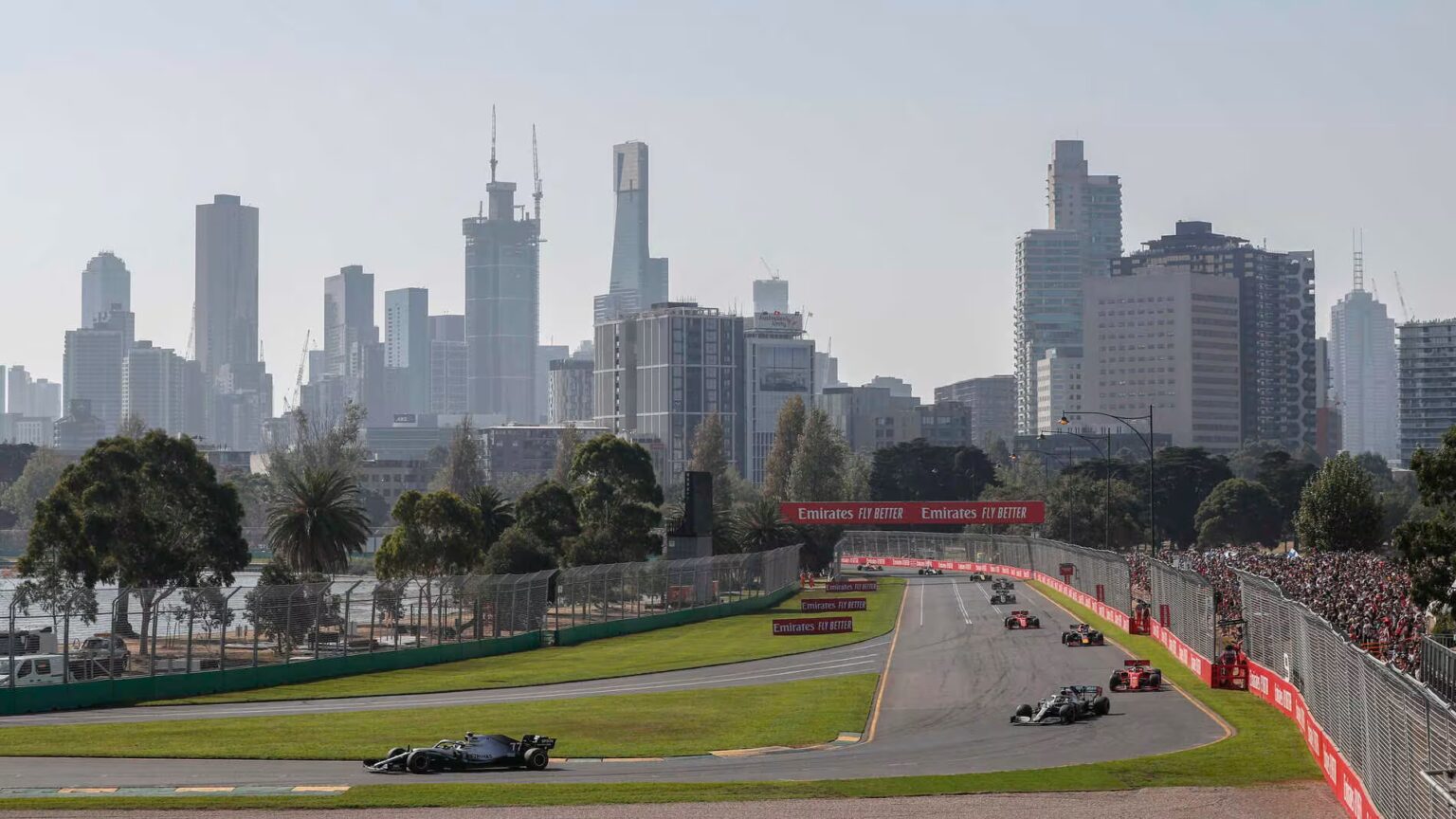
Hosting the Australian Grand Prix in Melbourne
Hosting the Australian Grand Prix represents both a tourism investment and a long-term brand strategy for Victoria, with the Australian Grand Prix Corporation holding a contract that runs through 2037 and secures season-opening status.
The hosting fee is substantial. Estimates place the Victorian Government’s commitment in the nine-figure range over the life of the agreement, covering rights payments, infrastructure upgrades and compliance requirements mandated by Formula 1 Management.
That investment buys more than race-day access. It secures global broadcast exposure, international marketing rights and premium calendar positioning that elevates Melbourne’s profile across Asia-Pacific and beyond.
Formula 1 Management captures scalable media upside, while Victoria captures tourism and employment spill overs tied to physical attendance and ancillary spending.
This is a deliberate value allocation between global rights monetisation and local economic activity.
Tourism and Economic Impact
The economic case for the event rests on measurable visitor inflows and spending patterns that extend beyond race weekend into broader tourism cycles.
In 2022, attendance reached approximately 419,000 across the event, including around 75,500 visitors who travelled specifically for the race or extended their stay in Victoria because of it. Economic impact was estimated at roughly A$171 million, supporting about 734 full-time equivalent roles across hospitality, transport and event services.
Momentum strengthened in 2023. Direct expenditure rose to approximately A$144 million, lifting total estimated economic impact to around A$268 million and supporting more than 1,100 full-time equivalent positions.
By 2024, attendance exceeded 452,000 over four days, marking a record for Melbourne and pushing hotel occupancy rates toward 90 to 95% across the CBD and surrounding precincts.
Spending intensity remains high. Non-local attendees frequently report average per-person spending well into four figures across accommodation, dining and entertainment, reinforcing the event’s positioning as a premium tourism catalyst.
The Subsidy Debate
Despite strong attendance figures and visible tourism uplift, debate continues around whether the hosting contract delivers net fiscal benefit once rights payments and infrastructure investments are fully incorporated into long-term budget analysis.
Critics argue that some visitor expenditure may represent displacement rather than entirely new economic activity, and that alternative public investments could theoretically generate broader returns.
Opportunity cost matters. Supporters counter that global broadcast exposure and long-term brand equity effects are difficult to quantify but strategically meaningful, particularly given Melbourne’s season-opening status within the championship.
The Government appears to treat the race as a strategic tourism asset rather than a short-term profit centre. Brand visibility remains central to the rationale.

Australia’s Position in the Formula 1 Ecosystem
Australia occupies a distinctive role within the championship as the traditional season opener, capturing outsized global media attention, particularly in regulation transition years such as 2026 when new power unit frameworks debut.
International visitors generate service export revenue through airlines, accommodation and hospitality venues, reinforcing the broader economic narrative supporting the hosting agreement.
There is also a soft power dimension. Global broadcasts project Melbourne as a modern, globally connected events city capable of hosting premium international experiences, which supports tourism and potential inward investment over time.
Domestic demand has natural limits, which is why sustained international marketing partnerships and bundled race-holiday packages remain essential to maintaining attendance growth.
Looking Ahead
The structural drivers underpinning the Formula 1 business model remain intact, supported by media rights growth, sponsorship monetisation and disciplined cost controls that protect margin expansion under Liberty Media’s ownership.
Victoria’s contract through 2037 locks in long-term participation in that ecosystem, even as fiscal scrutiny and economic modelling debates continue alongside strong attendance trends.
For finance professionals and business observers, the Melbourne weekend offers a practical case study in modern sports economics, where global rights monetisation, corporate capital discipline and public-private tourism strategy intersect in a single high-profile event.
It is more than a race, it is a demonstration of platform economics operating in real time.