
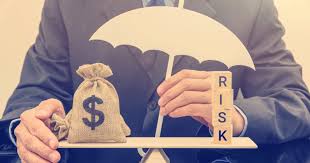
There’s a market, worth more than $150 trillion that influences your mortgage, your business, your job, your retirement, the value of your money and of virtually every major asset class. It’s the bond market, yet for most people, it remains poorly understood.
While the stock market dominate headlines and cryptocurrency captures speculation and fascination, bonds are where the true cost of money is determined. Governments depend on them, corporations raise capital through them, central banks watch them obsessively and the global financial system is built upon them.
So what is it?
What is a bond?
At its simplest, a bond is a loan.
Imagine you’re starting a business.
You’ve got the business plan, a compelling idea, and the rush of entrepreneurial blood to the brain but not enough money to make it happen.
So you borrow it.
Bonds work much the same way.
When an investor buys a bond, they are effectively lending money to a borrower in exchange for a promise: repayment of the original amount at a future date, plus interest along the way.
Businesses borrow. Governments do too, often on a vastly larger scale.
When a corporation or government needs capital, it can issue bonds, with the issuer acting as the borrower and the investor as the lender.
Governments may issue bonds to fund infrastructure, defence, healthcare, or to finance budget deficits. Corporations may issue them to fund expansion, acquisitions, or refinance existing obligations.
In the case of governments, borrowing can also serve a broader economic purpose.
If deployed productively, borrowed capital can support economic growth. Infrastructure investment, public spending, and targeted stimulus can create employment, improve productivity, and expand the tax base governments rely upon for revenue.

Source: Edelman – Less than 8% of federal government revenue in Australia comes from non-tax receipts.
Most governments, however, consistently spend more than they collect in revenue.
This shortfall is known as the budget deficit, and repeated deficits accumulate into government debt.
Who Buys Bonds?
When governments needs money, they borrow money from the public by issuing bonds.
The treasury holds auctions, selling bonds to investors from all over the world. These bonds are bought by banks, insurance companies, pension and super funds and foreign governments.
Investors buy bonds because government bonds from creditworthy nations are considered some of the safest assets in the world, serving as a risk-free benchmark.
This matters because the entire financial system is built upon assumptions about sovereign creditworthiness.
If major governments particularly the US government were ever to default on their debts, it would lead to a global economic crisis, so we’d have bigger fish to fry.
Important Terms For Bonds
- Principle – the amount originally borrowed/bought for and to be rapid to the investor at maturity.
- Coupon – The fixed interest payment a bondholder receives, usually expressed as a percentage of the bond’s face value.
- Maturity – The date on which the bond expires and the principal is repaid. It also refers to the length of time until that repayment occurs.
- Price – The amount investors are willing to pay for the bond in the market.
- Yield – The effective return an investor earns based on the bond’s current market price. Expressed as: Annual Coupon/Current Bond Price.
Unlike the principal, price fluctuates constantly.
The yield is different from the coupon because the price of the bond fluctuates constantly while the coupon is fixed.
How is the Price Decided?
The Primary Bond Market
Government sell bonds in auctions at a set schedule depending on the maturity of the bond.
The Yield at auction will depend on the demand for the bond at the auction.
Newly issued bonds are sold on the primary market and the yield here acts as the benchmark.
If demand is strong, investors are willing to accept lower yields. If demand is weaker, issuers must offer higher yields to attract capital.
This establishes the initial pricing benchmark for that bond.
The Secondary Bond Market
Investors in this market look to the price of the bond in the primary market to reassess the value of similar bonds in circulation. Investors constantly sell and buy bonds speculating on what will happen to yields.
Constantly reassesing:
- whether central banks will raise or cut interest rates
- whether inflation will accelerate or cool
- whether economic growth will strengthen or weaken
- whether governments have become more or less risky borrowers
These expectations influence what return investors demand for lending their capital.
Because bond prices move and coupons remain fixed, yields adjust constantly.
This is why bond yields effectively become the market’s real-time pricing mechanism for money.
This essentially means market interest rates are the yields global bond investors are demanding at the time, which is why the bond market is crucial and so connected to the global financial system, from mortgage rates and business borrowing costs to equity valuations and government debt servicing.
Why Bond Yields Matter
Bond yields are far more than returns for investors.
They are effectively the benchmark price of money across the global economy.
When governments issue bonds, they are competing for capital with businesses, banks, and other borrowers. As a result, government bond yields become the reference point from which much of the financial system is priced.
This affects far more than institutional investors.
Mortgage rates are influenced by bond yields because banks use wholesale funding markets and benchmark interest rates when pricing home loans.
Businesses rely on debt to fund expansion, acquisitions, equipment, and operations. When bond yields rise, borrowing becomes more expensive, making investment less attractive and slowing economic activity.
Because corporate bonds carry a greater risk of default than government bonds, investors demand a higher return as compensation. The difference is called the Credit Spread.
Governments themselves are deeply exposed.
As debt accumulates, higher yields mean higher interest costs on newly issued debt, placing increasing pressure on public finances.
For heavily indebted governments, even relatively modest increases in yields can materially increase debt servicing costs.
Equity markets are also closely linked to bonds.
The value of most financial assets depends not only on expected future cash flows, but on the rate used to discount those cash flows back to the present.
When bond yields rise, that discount rate rises too.
This reduces the present value of future earnings, which helps explain why growth stocks in particular often suffer when yields move sharply higher.
Because equities are inherently riskier than government bonds, investors demand a higher expected return to hold them. This additional compensation is known as the Equity Risk Premium.
In simple terms:
higher yields make money more expensive.
And when money becomes more expensive, asset prices, investment, and economic activity all feel the impact.
The Yield Curve: What Bond Markets Think About the Future
Bond markets do not merely reflect current conditions.
They constantly price expectations about the future.
Investors buying bonds are making judgments about inflation, economic growth, central bank policy, and credit risk.
This is why yield curves matter.
A yield curve compares bond yields across different maturities.
Under normal conditions, investors demand higher yields for lending money over longer periods due to uncertainty and inflation risk.
This creates an upward-sloping yield curve.
But when investors expect economic weakness or future rate cuts, shorter-term yields can rise above longer-term yields.
This is known as an inverted yield curve.
Historically, inverted yield curves have often preceded recessions.
In effect, the bond market becomes a real-time collective forecast about the economy.
Conclusion
While stock markets dominate headlines, bonds quietly determine the price of money itself.
They influence mortgage rates, business borrowing costs, government finances, equity valuations, and expectations for the global economy.
Stocks may tell stories.
Bonds reveal what capital actually believes.
To understand money, you must understand bonds.