

America’s largest banks may have found a legal way around one of the industry’s least popular regulations.
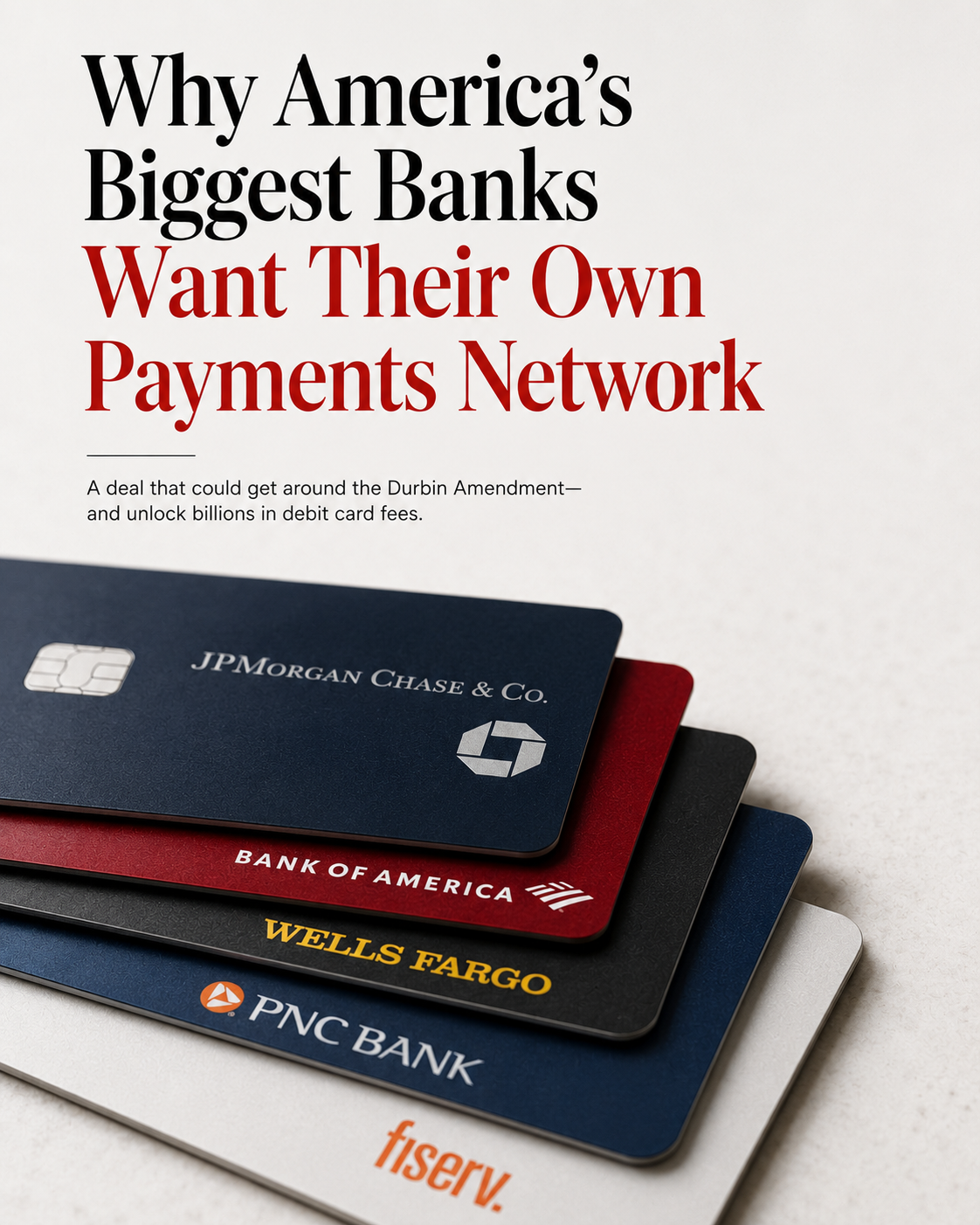
According to reports, major lenders including JPMorgan Chase, Bank of America, Wells Fargo and PNC Financial Services have held preliminary discussions about acquiring a debit-card payments network owned by financial technology company Fiserv.
The motivation isn’t simply to expand their payments businesses.
Owning the network could allow banks to bypass federal caps on debit-card interchange fees, potentially unlocking billions of dollars in additional annual revenue.
What Is The Durbin Amendment?
The debate centres around a provision of the 2010 Dodd-Frank Act known as the Durbin Amendment.
Whenever a customer pays with a debit card, the merchant pays an interchange fee to the financial institutions involved in processing the transaction. Before the financial crisis, these fees represented a significant source of revenue for banks.
Following the Global Financial Crisis, lawmakers argued that merchants were paying excessive fees with little ability to negotiate.
The Durbin Amendment gave the Federal Reserve the authority to cap debit-card interchange fees for banks with more than US$10 billion in assets, substantially reducing the revenue many large banks received from debit transactions.
Why Banks Want Their Own Network
Banks have long argued the fee caps have reduced their ability to offer services such as free checking accounts, debit-card rewards and fraud protection.
The issue has become even more relevant following Capital One’s acquisition of Discover Financial.
Unlike many banks that rely on third-party payment networks such as Visa and Mastercard, Discover owns its own payment network, allowing transactions to move directly through its infrastructure.
Large banks are now exploring whether acquiring Fiserv’s network could provide a similar advantage.
If the network qualifies for an exemption under existing regulations, banks could potentially process debit transactions outside the traditional fee caps, increasing interchange revenue without requiring changes to federal law.
Why A Deal May Never Happen
Despite the potential financial benefits, any acquisition would likely face significant political scrutiny.
Several banks have reportedly cooled on the idea over concerns that lawmakers, regulators and merchant groups could view such a transaction as an attempt to circumvent the intent of the Durbin Amendment.
Merchants have long argued lower interchange fees ultimately benefit consumers by reducing business costs and helping keep retail prices lower.
Banks, however, maintain the revenue supports customer services and innovation within the payments ecosystem.
The Bigger Picture
Whether a deal ultimately materialises remains uncertain.
However, the discussions highlight just how valuable payment infrastructure has become.
Rather than competing solely through traditional banking products, financial institutions are increasingly seeking ownership of the networks that move money behind the scenes.
For the country’s largest banks, controlling the payment rails may prove just as valuable as issuing the cards themselves.