

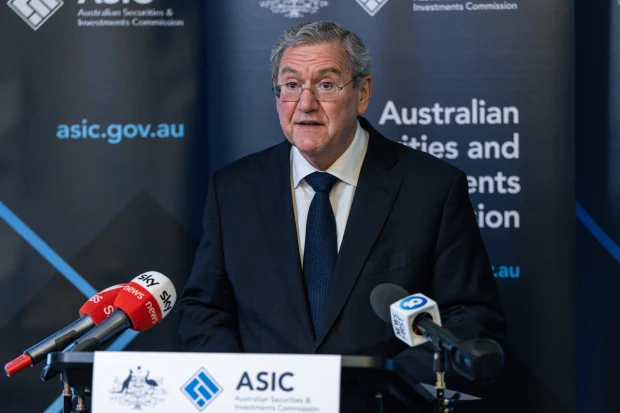
The ASX is now confronting the most serious threat to its structure in decades after ASIC chairman Joe Longo delivered his clearest warning yet: fail to meet reform commitments, and the ASX may lose control of its clearing and settlement operations.
It’s a line that regulators have tiptoed around for years. This week, Longo removed the subtlety. Speaking to stock brokers, he said that if the ASX fails to deliver governance overhaul it agreed to, ASIC will escalate, potentially all the way to recommending that government strip the exchange of its core market plumbing.
The warning follows a damning report from an ASIC-appointed governance panel, which found that the ASX’s subsidiary boards lacked independence, clarity of purpose and the resources required to oversee the clearing and settlement (CS) facilities underpinning Australia’s financial system. The panel highlighted a familiar tension: ASX Limited is both a profit-maximising listed company and a critical infrastructure operator. Those incentives do not naturally align.
The CHESS replacement failure pushed this conflict into the open. When the ASX scrapped its multi-year blockchain-based upgrade in the late 2022, Longo first floated the idea of structural separation. He paused on the grounds of market size and efficiency, but the governance report shows the underlying issues never went away.
The panel’s recommendations stop short of demanding a breakup, instead urging a reset: fully independent chairs of each CS facility board, no crossover with ASX Limited’s board, and independent control over accounts and budgets. ASIC commissioner Simone Constant underlined that the status quo leaves too much opacity and too many embedded conflicts. Several market participants, Computershare, Cboe, and even legal reviews, have made similar criticisms over the past two years.
Why This Moment Matters
The ASX has long operated as a vertically integrated monopoly – trading, clearing, settlement, registry technology and data services all housed under one group. That structure has delivered efficiency, but also entrenched market power and created clear conflicts of interest. For years, most stakeholders tolerated it. The CHESS debacle exhausted that goodwill.
ASIC’s message is simple: either the ASX demonstrates it can govern critical infrastructure impartially and competently, or Canberra will consider taking the plumbing away.
Such a change would reshape Australian markets. Clearing and settlement is not an add-on function, it is the backbone of equity markets. Moving it outside the ASX would shift revenue, control, and competitive dynamics in ways Australia has not seen since demutualisation two decades ago.

What It Means for Investors
For listed-market investors, the risk is less about systemic breakdown and more about operational transition. If reforms stalls and the government intervenes, markets could face years of structural change, cost adjustments and new operators entering key market functions.
ASX shares have already slid as governance concerns mount. Loss of CS operations, or even credible movement toward separation, would materially weaken the group’s earnings base. Market participants with exposure to clearing, settlement, or registry services should watch policy signals closely.
Investors should also consider the broader implication: regulators globally are tightening expectations on exchanges as both technology providers and systemic institutions. The ASX’s reckoning is part of a wider shift toward prioritising resilience over commercial expansion.
ASIC’s message leaves little room for interpretation. The era of light-touch oversight for the ASX is over and unless governance improves swiftly, the structure of Australia’s financial market may be rewritten.