

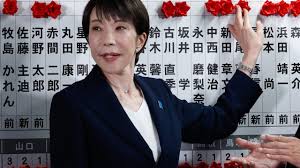
Prime Minister Sanae Takaichi’s won a decisive landslide in Japan’s snap election on February 8, securing a supermajority in the lower house of parliament with the LDP alone taking more than 316 of 465 seats, the strongest result for a single party in post-war history. The victory gives Takaichi a powerful mandate to pursue her economic agenda with minimal political resistance. Markets initially reacted positively, with Japanese equities rallying and the Nikkei hitting record highs on expectations of pro-growth policies, though bond yields and the yen have shown heightened sensitivity amid lingering fiscal and intervention risk.
Japan’s Economic Backdrop: Why Radical Policy Keeps Returning
For most of the latter half of the 20th century, Japan was the example of post-war economic stability and industrial success. That changed abruptly in 1990 when the collapse of its equity and property bubble triggered one of the longest and most complex economic adjustments in history where Japan entered its “lost decades”.
Japan’s economic politics still live in the shadow of the early-1990s bubble bust. The collapse didn’t just usher in the “lost decades”, it entrenched a long-running pattern of weak growth, low wage momentum, repeated deflation scares, actual deflation and subdued domestic demand. Policymakers responded by normalising extraordinary support: interest rates were slashed toward zero and then negative, while the BoJ pioneered and implemented some of the most aggressive monetary easing, becoming was the experimental ground for quantitative easing and other policies from large-scale asset purchases to yield-curve control. The deeper consequence wasn’t only economic, but behavioural: households, firms and governments became conditioned to low nominal growth, saving and recurring stimulus.
That history matters more today because the macro regime around Japan has shifted. Inflation has re-emerged, global rates are higher, and bond markets are less forgiving of fiscal ambiguity than they were in the era of zero yields. Japan’s economic standing has also slipped, once the second largest economy in the world , it now ranks fourth, making the case for “doing something bigger” easier to sell. The result is a familiar Japanese cycle: when incrementalism fails to change outcomes and trajectory, radical policy returns.
Why Sanae Takaichi, and Why Now
Sanae Takaichi is best understood not as a radical, an outlier, or an ideological break but as a product and response to this decades long frustration. Closely associated with Abe-era thinking, she represents a strand of thinking that sees stagnation as a national security risk and views state intervention as a strategic necessity rather than a temporary fix.
Her rise coincides with a more fragile global backdrop. Inflation has returned, global interest rates are higher, and central banks are less willing and able to suppress market signals indefinitely. At the same time, geopolitical risk has elevated the importance of defence, supply chains and industrial resilience.
For markets, this combination matters. Policies that may have been absorbed quietly a decade ago now face greater scrutiny from bond investors and currency markets.
Snap Election
Takaichi’s choice to call a snap election house the lower is central to how markets and the population will judge her agenda. The rationale is simple, major policy shifts require confidence and political durability, without a clear majority, her plans risk dilution, delay or compromise. So she has called for an early election in hopes of seeking voter for her policies.
Japan’s recent history offers a cautionary tale. The last snap election called in October 2024, saw the LDP lose 68 seats and their parliamentary majority. Markets remember how snap-elections can backfire. Importantly, markets aren’t focussed on politics per se, but on execution risk and whether policy can be delivered cleanly and predictably and a strong mandate reduces uncertainty, a fractured result as seen in Japan’s last election magnifies it.
The Policy Agenda: Ambition Meets Market Discipline
The real debate isn’t if she can deliver her policies, it’s whether it can be done credibly in a world where the bond market and currency market have regained a bite.
Tax Cuts: Demand Support or Credibility Test?
At the centre of the campaign is a pledge to suspend the 8% consumption tax on food for two years. The logic is clear, ease cost-of-living pressures by directly cutting the cost of food and groceries to support households, lift consumption and reduce political resistance to broader reform.
The real problem markets see is the financing. The suspension of the tax is estimated to cost the budget ¥10 trillion over two years. This will reduce the budgets revenue by roughly 6.5% and such visible holes in revenue in a country with the heaviest debt burden in the OECD will have markets asking, how will this be financed? Concern about the suspension punching a hole in the budget helped push long-dated JGB yields to record highs as investors repriced fiscal risk. In other words, the first credibility test isn’t the cut itself, it’s the detail: time limits, offsets, sequencing and most importantly a sustainable, credible and believable fiscal path rather than just a deficit hiking plan as we saw in 2022 with Truss’s mini-budget.
What distinguishes this election from the last isn’t simply the scale of the result, but the clarity it provides. Unlike the October 2024 election, which weakened the ruling coalition and left policy direction fragmented, Takaichi’s landslide delivers an unambiguous mandate. That reduces one of the key risks markets worry about, policy paralysis and dilution. With a commanding majority, fiscal and structural measures are less likely to be watered down through intra-party bargaining or coalition compromise. For investors, that matters more than the policies themselves. A strong mandate lowers execution risk, improves visibility around sequencing and timing, and makes coordination with the Bank of Japan more credible.
Fiscal Expansion or Debt Tolerance
Japan’s growing debt since the collapse in 1990 has historically been insulated by its structure: heavy domestic ownership, long maturities, older, saving population and strong home bias. That insulation, however, isn’t absolute. Under Takaichi’s plan, fiscal policy will shift toward large, discretionary public spending aimed at reflation, stimulus, growth and strategic resilience. The government has already approved a ¥21.3 trillion stimulus package, one of the largest in recent years, with funding directed toward household cost-of-living support, subsidies for small and medium-sized firms, and investment in priority growth sectors such as semiconductors, artificial intelligence and advanced manufacturing.
Alongside this, spending plans include a faster ramp-up in defence and security outlays, pushing Japan toward a defence budget closer to 2 % of GDP, 50% higher than it’s current ~1.4% of GDP, adding another ¥12 trillion to expenditure and reframing fiscal policy around national security and supply-chain resilience.
While markets are broadly constructive on targeted, productivity-enhancing investment, the scale and persistence of these commitments have begun to test investor tolerance, particularly at the long end of the JGB curve. Recent rises in long-dated yields have served as a reminder that Japan is not immune to bond-market discipline, it has simply been buffered by a unique investor base and years of extraordinary and resilient support from the BoJ.
The Bank of Japan Constraint
The BoJ is the critical constraint on any fiscal-led reflation push. It is operating with a very large balance sheet and heightened sensitivity around being seen as suppressing yields for fiscal convenience. Meanwhile, policy has already shifted: the BoJ’s key rate sits at 0.75%, a level described as the highest since the mid-1990s, and it has signaled a cautious approach as it balances inflation progress against growth risks.
For markets, their trust in her policies and the outcome of it will largely come down to the perceived relationship between fiscal policy and the central bank. Coordination and clarity reassure. Any hint of pressure, incoherence, or unfunded promises raises the risk premium quickly especially at the long end.
Japan’s Thatcher or Truss?
This comparison isn’t political, it’s procedural to show a real parallel in recent history. Thatcher’s reforms for better or for worse, represents reforms that ultimately earned market confidence through sequencing, clarity and institutional discipline. Truss represents policy shock, rapid announcements, unclear funding, and a bond-market revolt that forced reversal.
Truss Episode
Some observers have drawn parallels between Japan’s current situation and the Truss-Kwarteng September 2022 mini-budget. That package saw taxes slashed, cuts would’ve cost the UK budget £45 billion (roughly ¥9.6 trillion) with no clear explanation on how these cuts would be funded, leading markets to assume it would be deficit funded. Markets repriced the UK’s fiscal and inflation risk and investors began dumping UK bonds and the pound causing prices to drop and yields to spike as well as the pound to crash to near parity with the US dollar. The Bank of England then stepped in and announced emergency bond purchases to stabilise yields which along with restoring the pound was aided by Jeremy Hunt reversing the tax cuts and Truss resigning.
Japan’s situation, however, is not a carbon copy of the UK’s. Debt is overwhelmingly domestically held, maturities are long, its investor base is far more tolerant and used to low yields. Another major difference is the speed and process. Truss and Kwarteng’s cuts were a complete surprise, there was no coordination with the BoE and no forecasts or advisement from the OBR. But the Truss episode remains instructive: even advanced economies can face abrupt market discipline when fiscal ambition collides with unclear funding, weak communication, or strained coordination with the central bank.
Japan is not the UK, and a UK-style crisis is less likely given its domestic investor base and institutional setup. But the mechanism of market judgement is the same: credibility is earned through detail, not slogans. The bond market and the yen will be the first referees.