

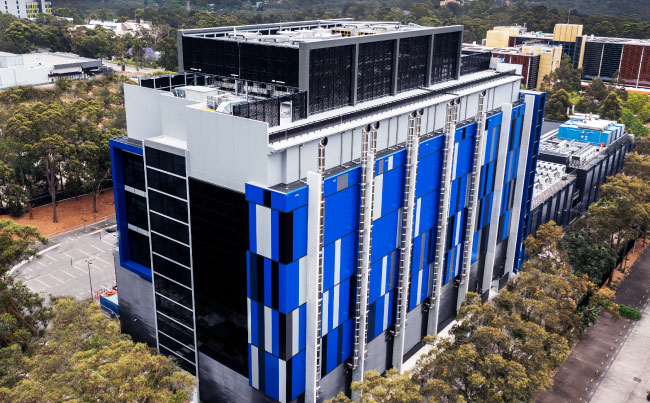
Australia’s push to strengthen domestic digital infrastructure has received a significant boost, with the federal government committing $200 million to ASX-listed Macquarie Technology Group. The investment signals growing concern among policymakers that critical technology capabilities, particularly cloud computing and artificial intelligence infrastructure, must remain within national control.
The funding will be delivered through the National Reconstruction Fund (NRF), a $15 billion government vehicle designed to support strategic industries and build long-term economic capability. For Macquarie Technology Group, the capital injection provides additional financial flexibility as demand for data centres and AI infrastructure accelerates.
Sovereign Cloud Becomes a Strategic Priority
The investment reflects a broader shift in government thinking about digital sovereignty. As artificial intelligence and cloud computing become increasingly embedded in both economic activity and national security, control over data infrastructure has emerged as a strategic concern.
Federal Industry and Innovation Minister Tim Ayres framed the investment as a step toward safeguarding sensitive data while enabling Australian businesses to adopt AI technologies more confidently.
This investment gives Australian businesses the confidence to safely harness the rapid growth of AI while making sure critical digital infrastructure and information remains securely onshore.
Tim Ayres, Federal Industry and Innovation Minister
Macquarie Technology already provides data centre and cloud services to numerous government agencies, including defence-related clients. Expanding sovereign cloud infrastructure would allow sensitive data to remain within Australian borders, reducing reliance on overseas technology providers.
The move also follows recent warnings from Commonwealth Bank chairman Paul O’Malley, who argued that Australia risks losing economic value to foreign technology platforms if it fails to build its own AI capabilities.
A Strategic Investment Through the National Reconstruction Fund
The NRF investment will be structured as hybrid notes, combining characteristics of both debt and equity. Funds will be delivered in two tranches between now and March 2027.
NRF chief executive David Gall said the deal aligns closely with the fund’s mandate to strengthen Australia’s industrial capability.
This investment builds the country’s digital industrial capability and enables enhanced competitiveness and productivity across multiple sectors.
David Gall, NRF Chief Executive
For Macquarie Technology, the funding arrives at a time when the company is planning significant expansion in digital infrastructure.
Chief executive David Tudehope said the additional capital would support the company’s long-term role as a provider of secure digital infrastructure and cybersecurity services.
This new source of capital enables us to expand our role as a provider of secure digital infrastructure and cybersecurity, delivering significant benefit to the Australian economy overtime.
David Tudehope, Macquarie Technology Chief Executive
The Data Centre Arms Race
Demand for data centre capacity has surged globally as artificial intelligence workloads place enormous pressure on computing infrastructure. Training and running AI models requires vast amounts of data storage, processing power and networking capacity.
This surge in demand has triggered an investment boom across the sector, pushing valuations higher and attracting significant capital from governments, infrastructure funds and private equity investors.
Macquarie Technology is positioning itself to benefit from this trend. The company plans to develop a $3 billion data centre campus in Sydney, a project designed to support future AI and cloud demand.
Construction is still several years away, but the company has begun exploring financing options. One potential approach involves selling a controlling stake in its existing Macquarie Park data centre campus to a superannuation fund, freeing up capital to fund the next phase of development.

Capital Requirements Reshape the Industry
The enormous cost of building next-generation data centres is forcing operators to rethink traditional funding models.
Macquarie Technology has previously funded its existing data centre portfolio through cash flows from its broader telecommunications business and debt financing. However, projects designed to support AI workloads require far larger capital commitments.
As a result, companies across the sector are increasingly turning to partnerships and external investors.
NextDC, another ASX-listed data centre operator, is currently seeking partners for a proposed $15 billion joint venture aimed at building up to 850 megawatts of data centre capacity in western Sydney.
Meanwhile, global infrastructure investor Blackstone is exploring ways to recycle capital from its AirTrunk data centre platform, potentially selling stakes in existing facilities to long-term investors.
AirTrunk has already raised massive financing to support its growth, securing agreements with around 75 banks that collectively hold more than $25 billion in loans tied to its data centre network.
The Strategic Stakes of AI Infrastructure
The rapid expansion of data centres highlights how artificial intelligence is reshaping the global technology landscape.
While software innovation often attracts the most attention, the infrastructure required to support AI applications is equally important. Data centres, networking capacity and secure cloud platforms form the physical backbone of the digital economy.
For governments, ensuring access to this infrastructure is becoming a matter of national competitiveness.
Australia’s investment in Macquarie Technology reflects a growing recognition that domestic capability in digital infrastructure could determine how much value the country captures from the next wave of technological innovation.
As AI adoption accelerates, the companies that control the underlying infrastructure may become just as strategically important as those developing the software itself.