
The next great IPO wave
The next IPO cycle is shaping as something bigger than a typical listing window, with a handful of frontier companies potentially resetting how investors think about valuation, scale, and what “growth” actually means in a capital-intensive world.
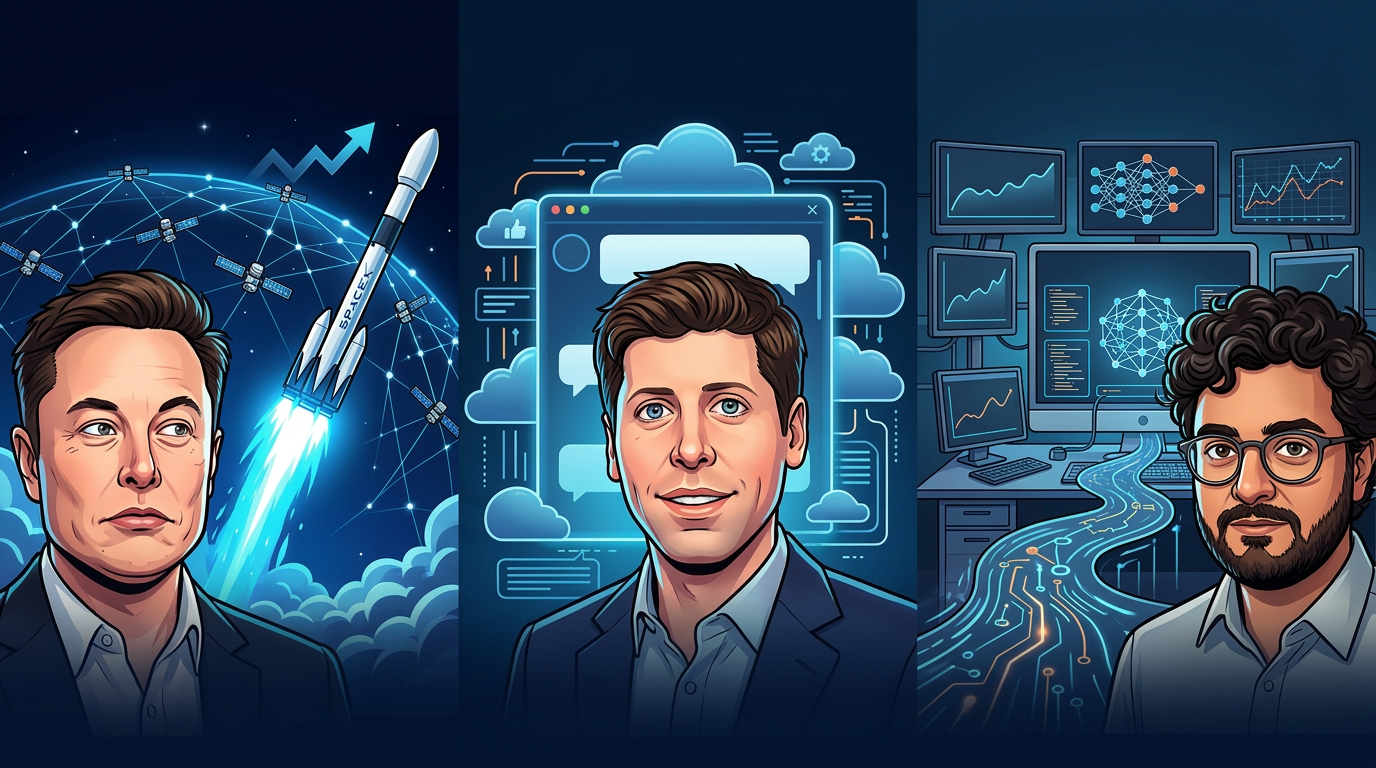
SpaceX is already being linked to a possible 2026 listing at a valuation somewhere between $1.5 trillion and $2 trillion, while OpenAI has been valued around $852 billion after its latest funding round and Anthropic is being discussed at roughly $300 billion, with timing that could land as early as late 2026.
These are not normal IPOs. They sit across venture capital, infrastructure, defence, telecoms, and cloud, which means any listing will be read not just as a capital event, but as a signal on how far the AI boom can stretch before valuation discipline pushes back.
What the numbers actually tell you
On the surface, the growth is hard to ignore. OpenAI is reportedly generating more than $25 billion in annualised revenue, while Anthropic sits closer to $9 billion with aggressive growth targets that push well beyond that into 2026 and beyond.
But the more interesting detail sits underneath those numbers, particularly when you look at the scale of reinvestment required to sustain that growth trajectory.
OpenAI alone has flagged ambitions to spend hundreds of billions on compute infrastructure over time, which reframes the business entirely, because what looks like a software company quickly starts to resemble a capital-heavy industrial platform that just happens to monetise through code.
SpaceX is even harder to box. It is part launch provider, part satellite network through Starlink, part defence-adjacent contractor, and part long-duration bet on a future space economy, which makes traditional valuation metrics feel incomplete, even if they still matter.
Valuation, and why the usual rules feel stretched
The clean answer is that these companies look expensive on traditional metrics. But that might not be the right framework.
Investors are not paying for near-term earnings, they are paying for dominance, network effects, and the possibility that one of these platforms becomes foundational infrastructure for the next decade of economic activity.
That said, there is a more uncomfortable angle that is starting to surface. If a business needs continuous, large-scale funding just to maintain growth, then revenue alone does not tell you much about durability or quality.
Scale can hide fragility. A company can grow quickly, post impressive top-line numbers, and still deliver mediocre long-term returns if margins remain under pressure from capital intensity and ongoing reinvestment requirements.
How markets are likely to react
If these IPOs land within a similar window, the impact on global markets could be significant, even for investors who never directly own the names.
First, they will absorb attention. Capital tends to follow narrative, and a cluster of high-profile listings like this can pull liquidity away from smaller or less obvious growth stories.
Second, they will reset valuation benchmarks. Anything linked to AI, cloud infrastructure, data centres, satellite networks, or defence tech will be repriced against whatever multiples these companies achieve in public markets.
Third, they could reopen the IPO pipeline at the top end of the market, particularly after a period where many of the best private companies stayed private for longer than expected.
There is also a feedback loop here. If these stocks list strongly and hold their valuations, they become currency for acquisitions, talent retention, and secondary transactions, which reinforces the cycle and pulls more companies toward listing.
If they struggle, the opposite happens quickly.
What it means for ASX investors
Direct exposure is limited. But the second-order effects matter more than most investors think.
Australian portfolios already carry global tech exposure through ETFs and managed funds, so any repricing of AI leaders will flow through into those holdings whether you intend it or not.
The more interesting angle is local. If the IPO cycle reinforces the idea that AI is fundamentally an infrastructure story, then ASX-listed companies tied to data centres, power generation, cooling, fibre networks, and industrial land should continue to attract attention.
This is already playing out. The narrative is shifting from “AI as software” to “AI as physical demand,” which naturally benefits markets like Australia that are rich in energy, resources, and infrastructure capacity.
On the space side, the ASX has fewer pure exposures, but telecom and connectivity-linked businesses could still benefit if low-earth-orbit networks prove commercially durable at scale.
The contrarian angle most investors miss
The more interesting question is timing. Public market investors may be arriving just as the funding burden peaks.
OpenAI and Anthropic are growing fast, but they are also spending at a pace that assumes future scale will justify today’s investment, which introduces a degree of execution risk that is easy to overlook in a strong narrative environment.
SpaceX carries a similar tension. The upside case points to strategic dominance in launch and connectivity, while the downside case highlights the reality that these are technically complex, capital-intensive operations where delays or failures can materially impact outcomes.
In that sense, these IPOs may not just test valuation, they may test patience.
What to watch closely
The headlines will matter, but the structure will matter more.Focus on lock-up periods, insider selling, revenue quality, customer concentration, and the scale of ongoing capital commitments required to sustain growth.
Pay attention to whether the IPO is funding the next phase of expansion or simply providing liquidity to early investors at peak enthusiasm.
That distinction often tells you more than the valuation itself. If demand is strong even at elevated multiples, markets will likely interpret that as confirmation that frontier tech remains the dominant theme.
If not, it could mark the point where narrative meets discipline.