
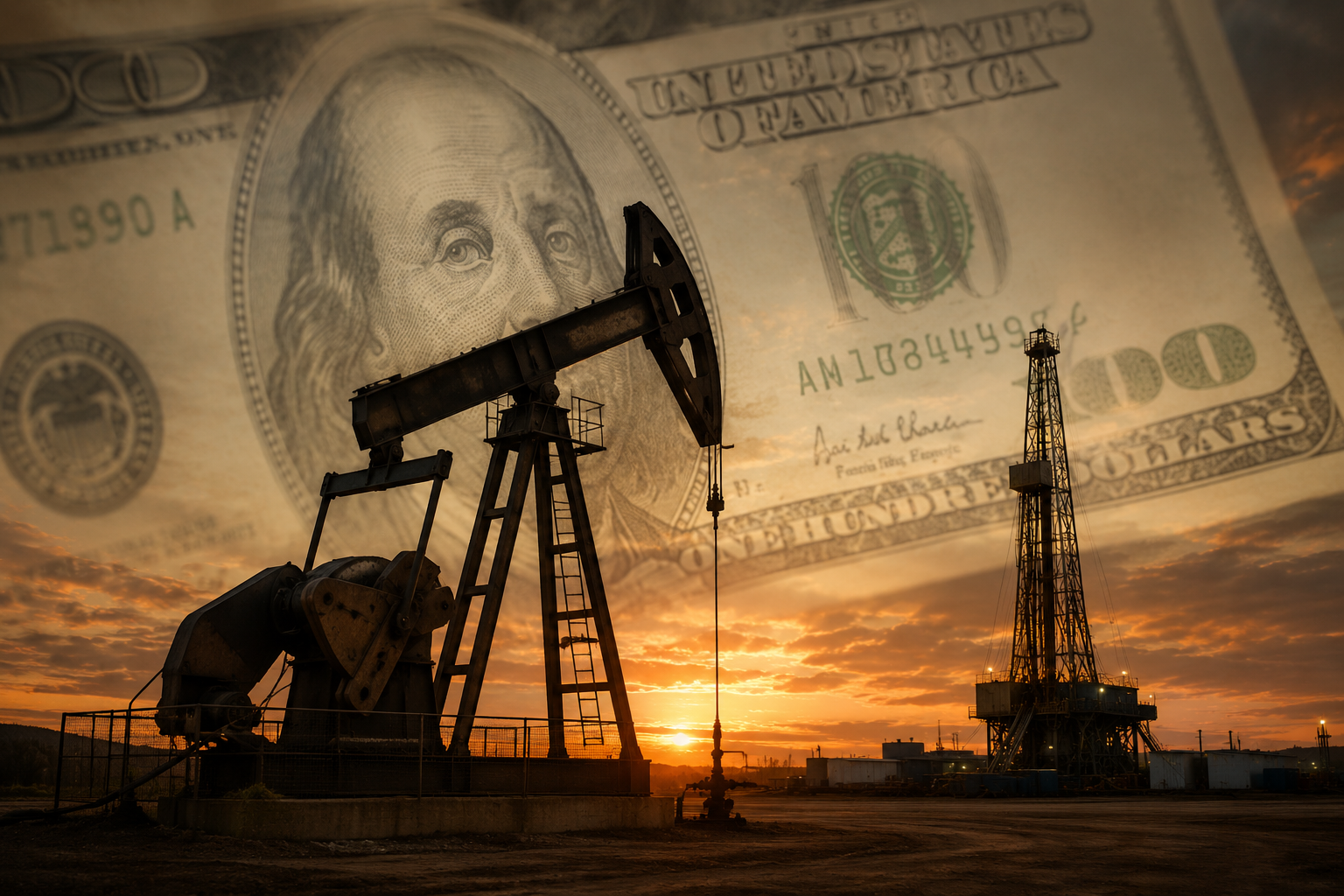
Oil is the world’s most important commodity.
The US dollar is the world’s dominant reserve currency.
For decades, the global oil trade helped connect the two.
The relationship between the two is the petrodollar.
Understanding it helps explain why the US dollar became so dominant in global finance, why global demand for U.S. assets remains so strong, and why American financial influence extends so deeply throughout the world economy.
Why Oil Matters
To understand the petrodollar system you must first understand why it is that oil is so important.
Modern economies run on energy.
Oil fuels transportation, aviation, shipping, manufacturing, chemicals, plastics, fertilisers, and large parts of global industry.
Every major economy depends on it in some way, shape or form.
Because oil is so critical, countries are constantly buying and selling in enormous quantities.
Some countries produce far more oil than they consume, while others consume large amounts but produce very little.
This creates one of the largest and most important global markets in existence.
Bretton Woods & The Nixon Shock
The foundations of the modern system was established during World War II at the Bretton Woods Conference in 1944.
Under this system, the US dollar became the centre of the global financial system and global trade, with other major currencies pegged to the dollar while the dollar itself was still on the gold standard.
In effect, the dollar became “as good as gold.”
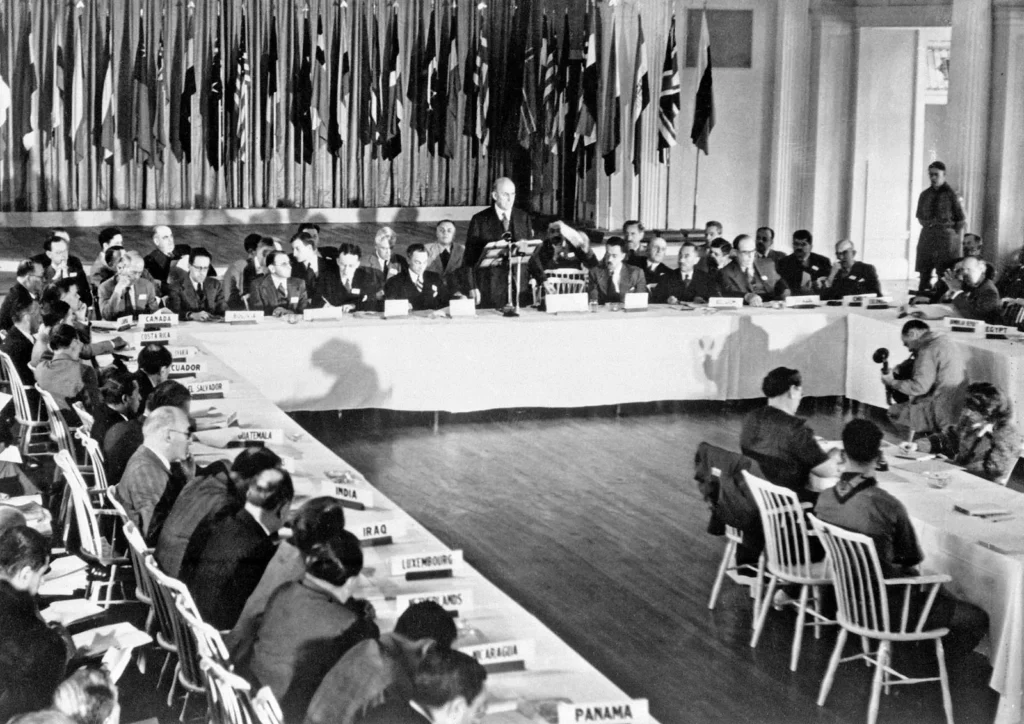
Bretton-Woods Conference, July 1944
But by the late 1960s and early 1970s, rising spending and expanding deficits in the US created pressure on the system as the number of US dollars circulating globally expanded.
Foreign governments began asking “does the US actually hold enough gold to back all of its dollars in circulation at the fixed exchange rate?”
Confidence in the system gradually weakened as countries increasingly sought to convert dollars into gold.
In 1971, President Richard Nixon ended the dollar’s convertibility into gold in what became known as the Nixon Shock.
This effectively ended the gold standard and transitioned the global economy towards fiat, where the value of currencies is derived from trust, institutional credibility, and economic stability rather than direct backing by physical commodities in this case gold.
The Birth of the Petrodollar
Shortly after the collapse of the gold standard, the world experienced another major shock.
In 1973, the Yom Kippur War broke out between Israel and a coalition of Arab states.
In response to Western support for Israel, OPEC Arab oil-producing nations imposed an oil embargo on the United States and several other countries.
The result was a global oil shock.
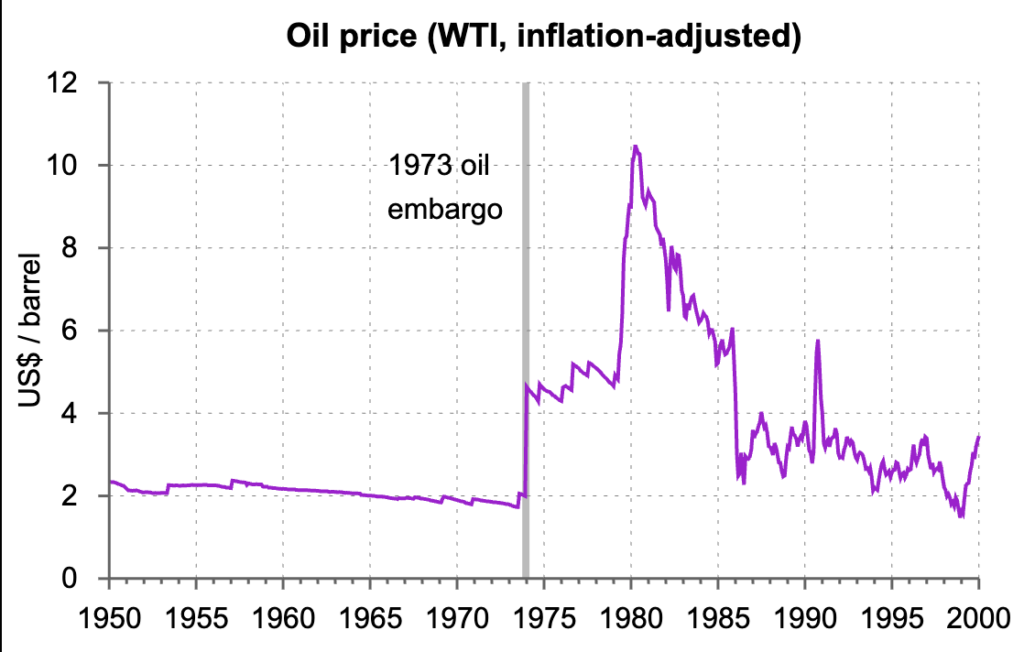
Oil prices surged, inflation accelerated sharply across Western economies, and fuel shortages. The OPEC oil crisis exposed how dependent modern economies had become on Middle Eastern energy and fossil fuels.
In response, the US and Saudi developed a strategic arrangement that would help reshape global finance.
Saudi Arabia agreed to sell oil in US dollars, while the US provided military and strategic support.
Over time, most major oil exporters also started adopting the dollar-based oil pricing.
This became known as the petrodollar system.
The implications were huge.
If countries needed oil, and oil was priced primarily in US dollars, then countries effectively needed dollars to participate in the oil trade.
How The System Works
The system created a powerful feedback loop.
Countries importing oil needed US dollars to purchase energy.
To secure those dollars, countries traded with the United States, accumulated dollar reserves, or invested in dollar-denominated assets.
Central banks around the world began holding large amounts of US dollars and US Treasury bonds as reserve assets.
This system helped create persistent global demand for both the dollar and Treasury bonds.
In effect, global energy demand helped reinforce global dollar demand.
Petrodollar Recyling
Oil-exporting countries did not simply hold large piles of US dollars indefinitely.
They reinvested them in a process called petrodollar recycling.
Oil-exporting nations frequently invested surplus dollars back into US government bonds, American financial assets, real estate, and global capital markets.
This created another reinforcing cycle: buy oil with dollars → oil exporters accumulate dollars → dollars flow back into US markets.
This helped strengthen the role of the dollar within the global financial system.
Why The Petrodollar Matters?
Global Demand For U.S. Dollars
Because global trade in oil was heavily done in the US dollar, countries around the world started maintaining large dollar reserves.
This reinforced the dollar’s role as the world’s dominant reserve currency and strengthened demand for dollar-based assets.
That demand matters for several reasons:
- It reinforces the dollar’s position as the world’s dominant reserve currency and safe-haven asset.
- During periods of global uncertainty, investors and central banks move capital into US dollars and U.S. Treasuries due to the depth, liquidity, and perceived stability of American financial markets.
- Strong demand for the dollar helps support purchasing power domestically by making imports cheaper and reducing inflationary pressure that comes with a weaker currency.
- The US can run large and persistent trade goods deficit and the dollar will remain strong because of the large capital inflow.
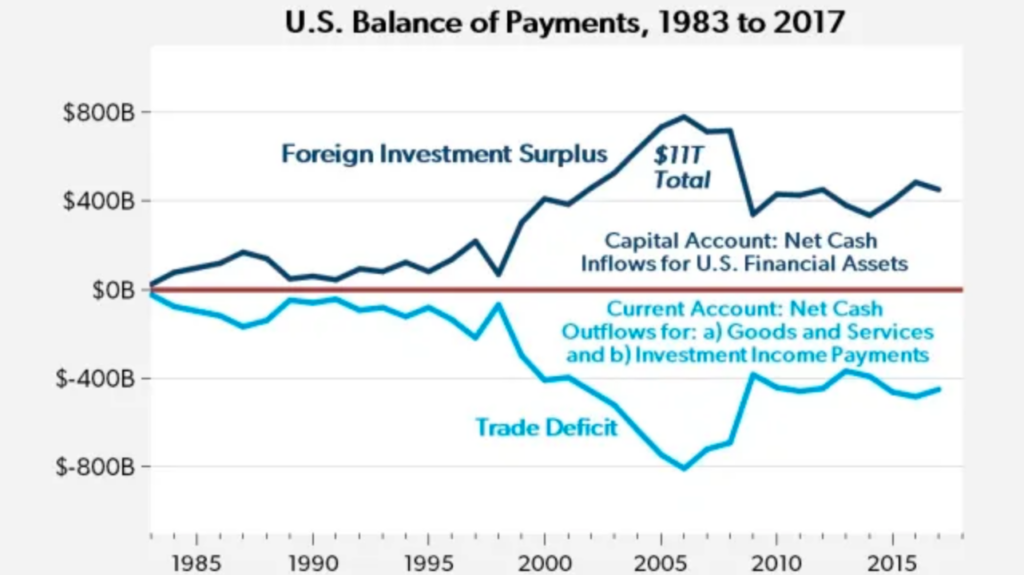
In this sense, the dollar’s global role provides the United States with significant financial and economic advantages.
Supports US Borrowing Power
Strong global demand for dollars and treasuries helps support US borrowing capacity.
When the world consistently buy Treasury bonds in large amounts, borrowing costs can remain lower than they otherwise might.
This gave the United States significant financial flexibility relative to most other countries and in part why the US government can run $1 trillion+ deficits and have the economy, yields and inflation be relatively fine.
Geopolitcal Influence
The dollar’s central role in global finance and trade also provides the US government with unusually powerful financial influence.
Because so much international trade and finance flows through dollar-based systems and institutions, US sanctions and embargoes can bring with it massive economic consequences.
Access to the dollar and being able to cut nations off became a form of geopolitical leverage.
Is The Petrodollar Dying?
In recent years, some countries have attempted to reduce their dependence on the US dollar.
China and Russia have increasingly conducted some trade in alternative currencies, while discussions around moving away from the dollar has increasingly become more common among BRICS nations and other developing and emerging economies.
While the dollar remains dominant, its share of global foreign exchange reserves has gradually declined. In 2000 it was over 70% and today it’s less than 60%.
However, replacing the dollar is far more difficult than simply choosing another currency.
Global trade, banking infrastructure, commodity pricing systems, financial contracts, reserve management, and capital markets are already deeply integrated around the dollar.
Since so much of global trade, finance, commodity pricing, and reserve management is already built around the dollar, switching to alternative systems becomes costly, complex, and inefficient.
The dollar also benefits from deep liquidity, institutional trust, legal protections, and the sheer size of American markets.
In this sense, the dollar’s dominance today extends far beyond oil alone.
The Dollar’s Global Advantage
The petrodollar system helped reinforce global demand for US dollars and US financial assets for decades.
But the modern dollar system is now supported by a much broader financial architecture.
Oil remains important, but so do Treasury markets, global trade networks, capital market depth, institutional stability, and financial liquidity.
Big global systems rarely disappear overnight.
More often, they gradually evolve over time.
Whether the world slowly moves toward a more multipolar monetary system remains uncertain.
But understanding the petrodollar system remains essential to understanding modern global finance itself.