
The sector investors are starting to view differently
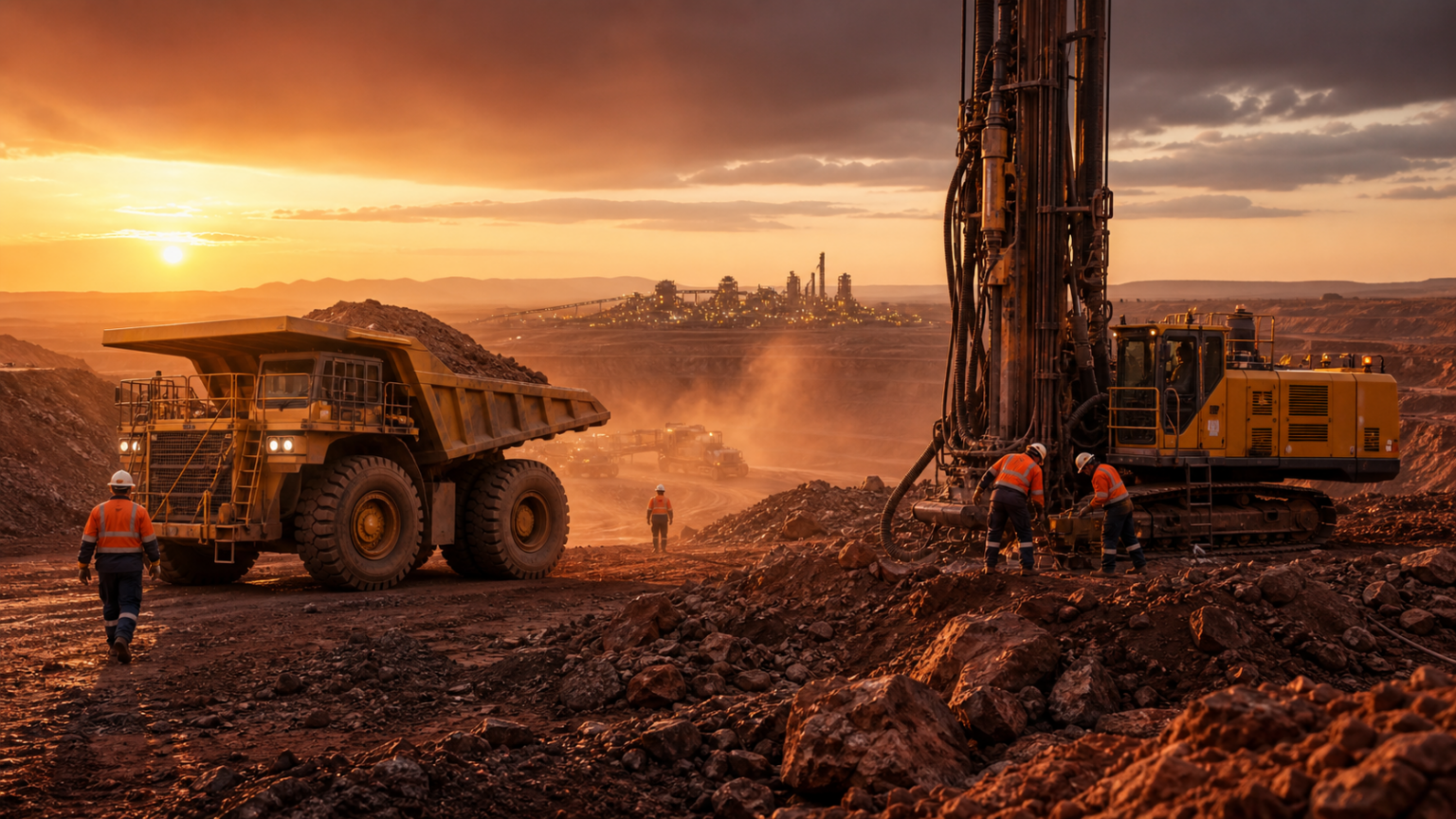
The ASX mining services sector sits at the centre of Australia’s resources economy, but it remains misunderstood by many investors. These companies do not directly take commodity price risk in the same way miners do. Instead, they provide the equipment, labour, engineering capability, maintenance expertise and operational support required to keep mines running.
That distinction matters.
Mining services businesses are ultimately exposed to the level of activity within the resources sector rather than simply the spot price of iron ore, gold or lithium. Their earnings depend on mine expansions, production requirements, contract quality and execution discipline.
Over the past 12 months, the sector has attracted renewed attention from investors. Several companies have strengthened their balance sheets, improved contract visibility and demonstrated that mining services can become more durable industrial businesses rather than purely cyclical trades.
For investors, that is the key shift.
The best operators are no longer being valued only as a leveraged play on commodity prices. They are increasingly being assessed on the quality of their earnings, customer relationships, order books and ability to compound through multiple cycles.
Why the sector matters now
Australia’s resources outlook into 2026 remains constructive, although the market environment is more balanced than the peak of the previous commodity cycle.
Commodity prices have moderated from earlier highs, but miners continue to invest heavily in production, maintenance, mine-life extensions, automation and productivity improvements. These decisions create ongoing demand for mining services providers.
This creates a more interesting investment case than many outsiders realise.
A mining company can experience pressure when commodity prices fall, but a service provider may continue performing if customers maintain spending on sustaining capital, equipment utilisation, drilling, maintenance and operational efficiency.
The relationship between miners and service providers has also evolved.
Modern mines increasingly rely on specialist contractors to improve productivity and reduce operational complexity. That creates opportunities for businesses with strong technical capability, reliable delivery and long-term customer relationships.
The important question for investors is not simply whether mining activity remains strong.
It is whether companies can convert that activity into reliable margins and cash flow.
Australia’s competitive advantage
Australia has developed one of the world’s deepest mining services ecosystems.
The country has decades of experience operating mines in remote environments, managing complex logistics networks and delivering large-scale projects under strict safety and regulatory standards.
That capability creates a genuine competitive advantage.
Mining services is not a simple commodity product. Customers are not only buying equipment or labour. They are buying reliability, experience, safety systems, mobilisation capability and confidence that operations will continue without disruption.
Australian operators often compete successfully because they understand challenges that are difficult to replicate elsewhere.
Remote workforce management, extreme weather conditions, long-distance supply chains and demanding customer expectations have created a specialised knowledge base that benefits established providers.
Companies operating in contract mining, maintenance, drilling services and mining technology can use that experience as a competitive moat.
However, Australia is not competitive on every front. High labour costs, expensive logistics, regulatory requirements and ongoing skills shortages continue to pressure margins. Smaller operators especially can struggle when contracts are won on aggressive pricing assumptions.
This means the strongest opportunity is not necessarily in the cheapest services. It is in specialised services where execution quality matters more than price.
The sector has changed over the past year
The last 12 months have been important for listed mining services companies.
Investor sentiment has improved as several businesses have repaired balance sheets, strengthened order books and demonstrated better capital discipline.
Companies such as NRW Holdings and Macmahon have benefited from this shift as investors reassessed the quality of earnings across the sector.
The market is becoming more selective. Mining services companies are no longer being treated as one group. Investors are separating businesses with strong visibility and recurring revenue from those that remain heavily exposed to contract timing, commodity cycles and operational risk.
That distinction is likely to become even more important.
A company with a large order book is not automatically attractive. Investors are increasingly focused on whether those contracts generate acceptable margins, convert into cash and support long-term shareholder returns.
NRW Holdings
NRW Holdings has emerged as one of the benchmark companies within the ASX mining services sector.
The company combines scale, diversification and revenue visibility better than many peers. At its FY25 result, NRW reported a consolidated order book of approximately $6.1 billion, with around $3 billion already secured for FY26.
For mining services investors, that level of visibility matters.
The sector can generate strong revenue growth during favourable conditions, but earnings quality depends heavily on whether companies can maintain profitable contracts and manage execution risk.
NRW’s strength comes from diversification. The company operates across contract mining, civil construction, maintenance and engineering services, reducing reliance on any single commodity, customer or project type.
That creates a more resilient earnings profile. The investment case is based on the idea that NRW has evolved from a traditional contractor into a broader industrial services platform.
The main risk remains execution. Large contracts create significant opportunity, but they also require disciplined delivery. Cost overruns, labour issues or poor project assumptions can quickly impact margins.
Macmahon Holdings
Macmahon remains one of the most recognised pure-play contract mining companies on the ASX.
The company provides surface and underground mining services and has benefited from improving investor confidence across the mining services sector. As commodity markets stabilised and miners continued investing in production capacity, Macmahon became one of the clearer beneficiaries of stronger activity levels.
The investment case is relatively straightforward.
When mining companies continue awarding contracts, extend existing agreements and maintain high fleet utilisation, Macmahon has the ability to convert industry activity into revenue and earnings growth.
That operational leverage is attractive during a supportive cycle.
Unlike a miner, Macmahon does not rely directly on commodity prices increasing. Instead, it benefits when mining companies continue spending on production and outsourcing operational requirements.
However, investors need to understand the trade-off. Contract mining is a competitive industry. Labour costs, equipment utilisation, customer negotiations and contract pricing all influence profitability. A poorly priced contract can reduce returns even when headline revenue growth remains strong.
Macmahon therefore represents a higher-growth expression of the sector, but one that requires confidence in management execution and contract discipline.
Perenti
Perenti offers investors a broader international exposure to mining services.
Through businesses covering underground mining, contract mining and drilling services, the company has built a global platform that extends beyond Australia.
That diversification can become valuable during periods when regional mining activity moves in different directions.
The company’s opportunity is not simply about being larger. The real question is whether scale can translate into better returns, stronger margins and more consistent cash generation.
This is where mining services investors have become more demanding.
Growth alone is no longer enough. The market increasingly rewards companies that can demonstrate disciplined expansion, strong contract selection and reliable shareholder returns.
Perenti remains strategically interesting because it operates across several parts of the mining services value chain.
If execution improves and international operations continue delivering, the company has the potential to benefit from a broader recovery in mining investment.
The risk is that geographic diversification can also introduce complexity. Operating across multiple regions brings additional regulatory, labour and execution challenges.
For investors, Perenti represents a company with meaningful upside, but one where operational consistency remains critical.
Mineral Resources
Mineral Resources sits slightly outside the traditional definition of a mining services company, but it remains an important part of any discussion around the sector.
The company operates through a hybrid model, combining mining services capability with direct exposure to commodities including iron ore and lithium.
That makes Mineral Resources different from most contractors.
The company demonstrates how mining services capability can evolve into a larger industrial platform rather than simply remaining a service provider.
Its mining services division has become an important contributor to the broader group, particularly through large-scale projects such as Onslow Iron.
The attraction is clear.
Mineral Resources offers scale, operational capability and exposure to some of the largest themes affecting Australian resources, including infrastructure investment and critical minerals.
However, the complexity is also obvious. Unlike a pure mining services company, Mineral Resources carries commodity exposure, greater balance sheet complexity and more moving parts across its operations.
For investors, the company is useful because it shows the potential ceiling of mining services capability, but it also highlights why simpler business models can sometimes be easier to value.
Mader Group
Mader Group is one of the more interesting growth stories within the sector because its business model differs from traditional mining contractors.
Rather than focusing primarily on contract mining, Mader specialises in maintenance, fleet support and skilled technical labour for mining operators.
That difference matters.
Maintenance work is often more embedded into mining operations than project-based contracting. Once a mining company relies on specialist technicians to maintain equipment and maximise fleet uptime, the relationship can become highly valuable.
This gives Mader a different earnings profile compared with many peers.
The company reported strong growth through FY25, with revenue reaching approximately $872 million and guidance pointing towards further expansion.
The investment appeal comes from the recurring nature of its service offering.
Mining companies cannot operate efficiently without reliable maintenance systems. This creates a structural demand driver beyond short-term commodity movements.
However, the model is not without risks.
Mader remains labour intensive, meaning workforce availability, wage inflation and utilisation rates are important factors investors need to monitor.
A rapidly expanding service company must balance growth with operational discipline.
If management maintains that balance, Mader has the potential to remain one of the sector’s strongest growth platforms.
Imdex
Imdex provides a different way to access mining services growth.
The company is not focused on heavy equipment or labour-intensive contracting. Instead, it provides specialised technology, drilling tools, data solutions and workflow systems that help mining companies improve exploration and production decisions.
This positions Imdex closer to the technology side of mining services.
The company benefits from a broader industry trend.
Mining companies are increasingly focused on improving productivity, reducing waste and making better decisions through data.
As deposits become harder to discover and operational efficiency becomes more important, technology providers can become increasingly valuable.
Imdex also avoids some of the cost pressures affecting traditional contractors.
Its business model is less dependent on large workforces and heavy equipment fleets, which can provide greater flexibility during challenging operating conditions.
The risk is valuation.
Technology-enabled mining businesses can attract stronger investor interest, but expectations also rise quickly.
The company must continue demonstrating that innovation translates into measurable value for customers.
Orica
Orica represents one of the most established names in the broader mining services ecosystem.
The company provides blasting systems, explosives and technical solutions that are essential to mining operations globally.
Its importance comes from how embedded its services are within the mining process.
While some contractors compete for individual projects, Orica operates closer to the core operating requirements of mines.
That creates a different type of investment profile.
The company remains exposed to mining activity, but its revenue base is supported by essential products and long-term customer relationships.
This can make Orica more defensive compared with traditional contract mining businesses.
For investors, Orica highlights an important theme within the sector.
The strongest mining services companies are often those providing services miners cannot easily replace.
Whether through technology, maintenance capability or specialised operational knowledge, embedded relationships create stronger competitive positions.
Smaller listed operators, higher risk and higher reward
The smaller end of the ASX mining services market offers potentially greater upside, but investors need to recognise the additional risks.
Smaller contractors, drillers and specialist operators often have greater exposure to contract timing, customer concentration and changes in mining activity.
A new contract win can transform earnings. A delayed project can have the opposite effect.
This creates a very different investment profile compared with larger operators such as NRW or Mader.
For investors, the key is understanding whether a lower valuation reflects opportunity or simply higher operational risk.
Swick Mining Services
Swick represents a more direct exposure to drilling activity.
The company’s performance is closely linked to exploration budgets, rig utilisation and mining investment decisions.
When exploration activity improves, drilling companies can experience strong operating leverage.
However, that leverage works both ways. If miners reduce exploration spending or delay programs, drilling companies often feel the impact quickly.
Swick is therefore best viewed as a cyclical opportunity rather than a defensive mining services holding.
Mitchell Services
Mitchell Services follows a similar pattern.
The company provides drilling services and offers investors exposure to improving mining activity.
Its upside comes from higher utilisation, stronger pricing and increased customer demand.
The challenge is that drilling businesses often operate with limited room for error.
Equipment costs, customer concentration and contract timing can quickly influence profitability.
Mitchell therefore represents a higher-beta way to gain exposure to a recovery in mining activity.
WestStar Industrial
WestStar Industrial sits further towards the speculative end of the sector.
The company operates in industrial services and infrastructure-related projects, where contract execution and working capital management are critical.
For smaller companies in this part of the market, success depends on a narrow set of factors.
They need to win quality work, deliver projects efficiently and maintain financial discipline.
The upside can be significant, but investors need to accept a higher level of uncertainty.
Which companies could outperform?
Looking across the sector, the strongest businesses appear to share several characteristics.
They have visible work pipelines, strong customer relationships, diversified revenue streams and management teams focused on returns rather than simply growth.
NRW and Mader stand out as two of the clearest examples. NRW offers scale, diversification and significant order-book visibility.
Mader provides exposure to maintenance demand and a more recurring service model. Macmahon also has meaningful upside if contract execution remains strong and mining activity continues supporting demand.
Perenti remains an interesting turnaround and growth opportunity if international operations continue improving.
Mineral Resources offers significant upside, although its broader exposure makes it more complex to analyse.
The common theme is that investors are increasingly rewarding quality.
The cheapest company is not necessarily the best opportunity. In this sector, earnings visibility matters.
The next 12 months
The outlook for mining services remains constructive, although the easy gains from sector re-rating may already have occurred.
The next phase will likely separate companies with genuine competitive advantages from those benefiting only from favourable sentiment.
Mining investment remains supported by several long-term themes.
These include energy transition metals, productivity improvements, automation, mine extensions and infrastructure requirements.
The strongest opportunities are likely to come from companies solving real problems for miners.
Maintenance specialists, technology providers and diversified contractors all fit within this trend.
The biggest risks remain familiar. Labour shortages, cost inflation, poor contract pricing and weaker mining investment could pressure earnings across the sector.
Closing view
The modern ASX mining services sector is becoming a more sophisticated investment opportunity.
The best companies are no longer viewed simply as cyclical contractors tied to commodity prices.
They are increasingly recognised as specialised industrial businesses supporting one of Australia’s most important economic advantages.
NRW, Mader, Macmahon, Perenti, Mineral Resources, Imdex and Orica all demonstrate different ways companies can create value within the mining ecosystem.
For investors, the key takeaway is simple. The winners are unlikely to be the businesses most exposed to commodity excitement.
They are more likely to be the companies that consistently help miners operate better, reduce costs and improve productivity.
That is where the long-term value in the ASX mining services sector is likely to sit.