

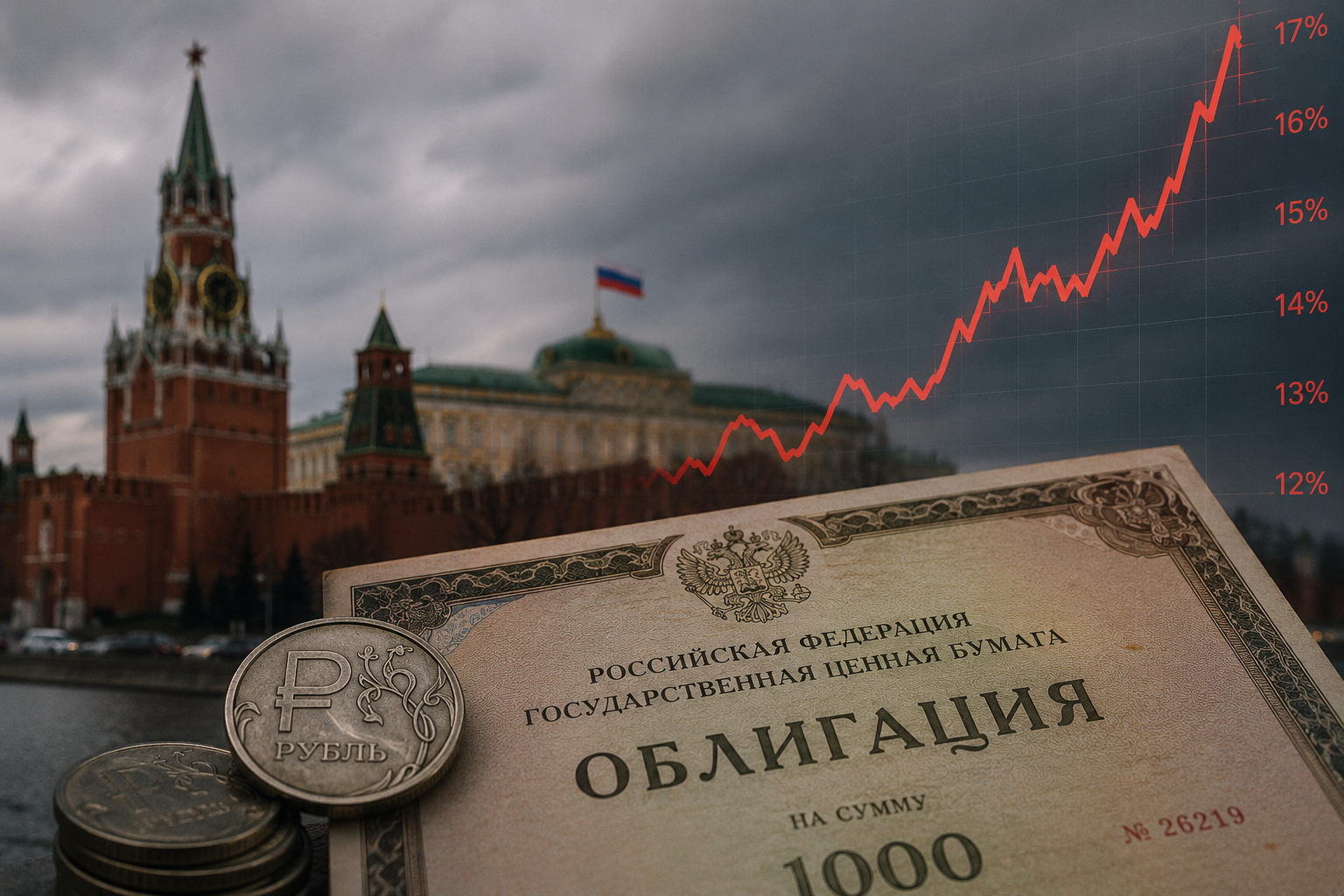
Governments can run budget deficits for years, even decades, provided investors remain willing to buy bonds and finance them. As long as lenders have confidence that a government can continue servicing its debt, borrowing remains relatively straightforward.
- How Governments Borrow Money
- What Happens When A Bond Auction Fails?
- What Happened In Russia?
- Why Are Investors Pulling Back?
- Growing Budget Deficits
- Sanctions Have Reduced The Pool Of Buyers
- Domestic Banks Cannot Buy Unlimited Debt
- Inflation Is Complicating The Picture
- Why Doesn’t The Central Bank Simply Buy The Bonds?
- Is Russia About To Default?
- What Now?
When that confidence begins to disappear, however, the consequences can escalate quickly.
That is why Russia’s recent decision to suspend government bond auctions has attracted significant attention. While the announcement does not mean a sovereign default is imminent, it represents one of the clearest signs yet that financing the Kremlin’s growing budget deficits is becoming increasingly difficult.
To understand why this matters, it is first worth understanding how governments actually borrow money.
How Governments Borrow Money
Governments generally borrow by issuing bonds through regular auctions.
Each bond promises investors three things:
- Face value – the amount repaid when the bond matures.
- Coupon – the annual interest payment.
- Maturity – the date the government repays the principal.
When investors purchase these bonds, they are effectively lending money to the government in exchange for predictable income and repayment at maturity.
Most governments regularly issue new bonds to finance budget deficits and refinance maturing debt. Rather than paying off all outstanding debt or running surpluses, governments typically replace old bonds with newly issued ones, a process known as rolling over debt.
What Happens When A Bond Auction Fails?
Government bond auctions normally attract strong demand, even when governments must offer relatively high interest rates.
A failed auction doesn’t necessarily mean nobody wanted to buy the bonds. Instead, it usually means investors were unwilling to purchase them at the yields offered.
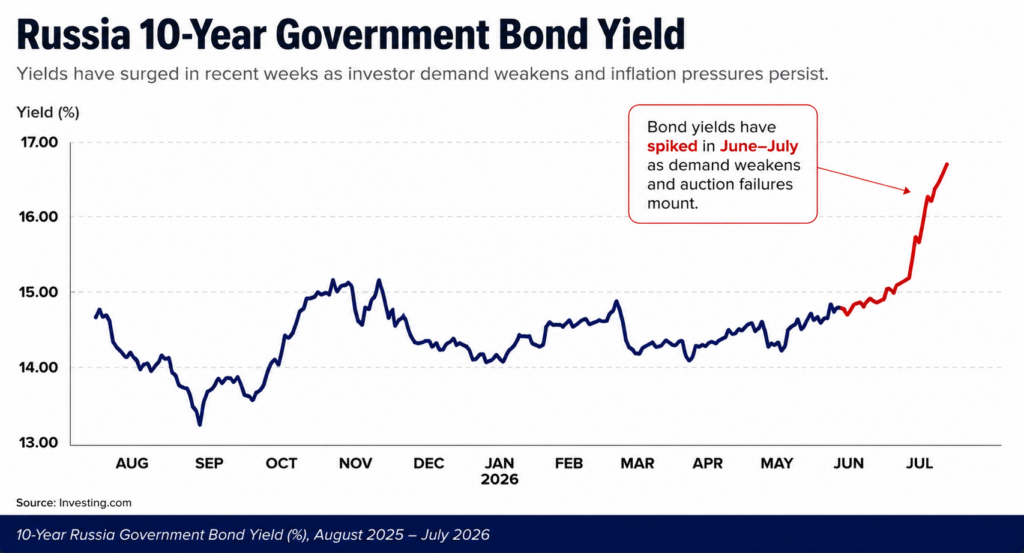
The government then faces a choice, it can either accept significantly higher borrowing costs to attract investors or postpone the auction altogether in the hope that market conditions improve.
Russia appears to have chosen the latter.
What Happened In Russia?
Russia’s Finance Ministry recently suspended its regular government bond auctions after a series of unsuccessful debt sales.
According to reports, one auction received zero bids, while another raised just 10.3 billion rubles (US$190M) against a planned issuance of 110 billion rubles (US$1.38B). Overall, the government has reportedly raised only around 10 billion rubles towards a third-quarter borrowing target of approximately 1.5 trillion rubles (US$18.8B).
Rather than locking in substantially higher borrowing costs, the Finance Ministry elected to suspend further auctions for the time being.
While Russia still retains other sources of financing, repeated auction failures suggest investors are becoming increasingly reluctant to fund the government on existing terms. Especially dire as the war in Ukraine reaches its fourth year.
Why Are Investors Pulling Back?
Several factors appear to be driving weaker demand for Russian government debt.
Growing Budget Deficits
Russia’s fiscal position has deteriorated as military expenditure remains elevated while government revenues have come under pressure.
Larger budget deficits require greater borrowing, increasing the volume of bonds the government must sell into the market.
Sanctions Have Reduced The Pool Of Buyers
Western sanctions have significantly reduced the number of investors willing or legally able to purchase Russian government debt.
Many international financial institutions are prohibited from participating in Russian bond markets, while others have withdrawn voluntarily because of political uncertainty, liquidity concerns and sanctions risk.
As a result, the Kremlin has become increasingly reliant on domestic investors.
Domestic Banks Cannot Buy Unlimited Debt
Russian commercial banks now represent the government’s primary source of financing.
However, their balance sheets are not unlimited.
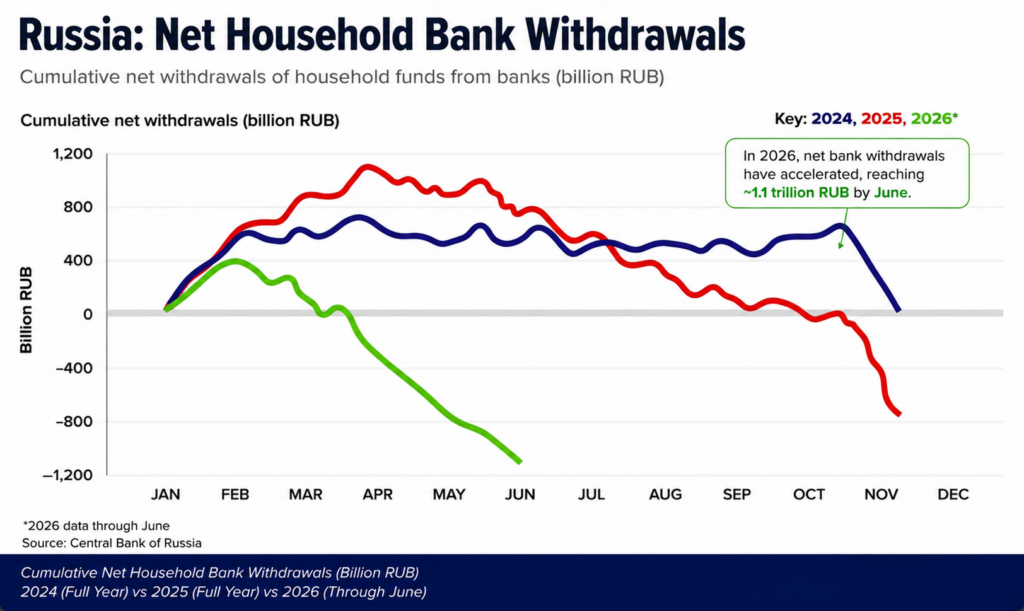
As government borrowing requirements increase, domestic banks become progressively less able or willing to absorb finance additional debt unless they receive higher returns. This limits the government’s ability to rely solely on domestic institutions to finance persistent deficits.
Inflation Is Complicating The Picture
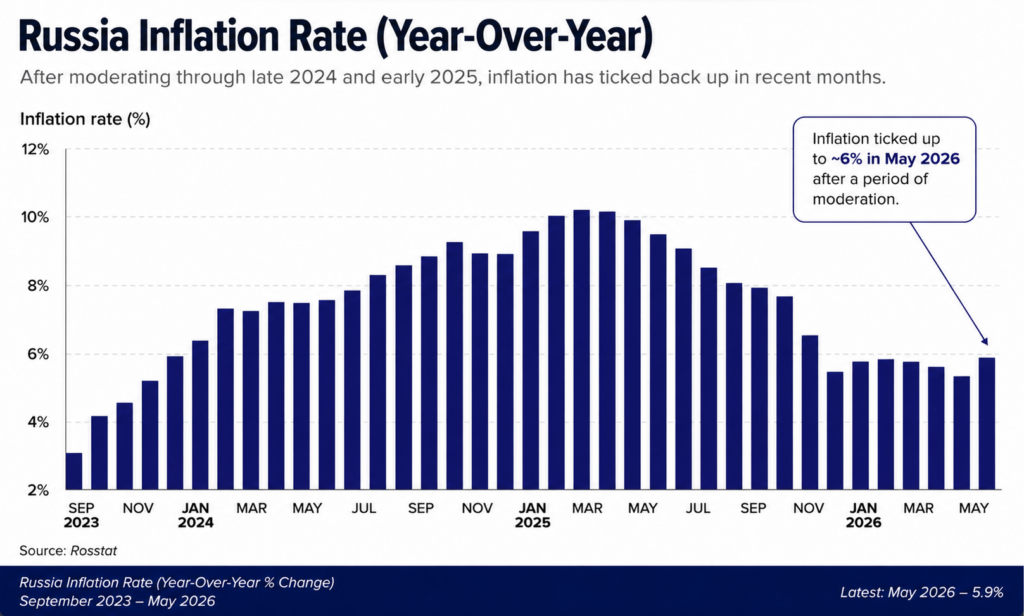
Inflation has begun accelerating again, increasing expectations that the Bank of Russia may need to keep interest rates higher for longer or potentially raise them further.
Higher future interest rates reduce the attractiveness of existing bonds, encouraging investors to delay purchases in anticipation of better returns later.
This makes attracting buyers even more difficult.
Why Doesn’t The Central Bank Simply Buy The Bonds?
Some readers may wonder why the Bank of Russia does not simply purchase government bonds itself.
While central banks in some countries have purchased large quantities of government debt during periods of financial stress, doing so increases the money supply and can add to inflationary pressure.
With inflation already proving difficult to contain, large-scale monetary financing would risk undermining the central bank’s efforts to maintain price stability, leaving policymakers with fewer options than might initially appear.
Is Russia About To Default?
Not necessarily.
A failed bond auction does not automatically lead to sovereign default.
Russia continues to collect tax revenue, earn export income and possesses alternative methods of financing government expenditure. The government can also draw on reserves, reduce spending or delay borrowing if necessary.
However, repeated failed auctions are an important warning sign.
Governments rarely encounter debt crises simply because they owe money. Problems emerge when investors become unwilling to continue financing that debt at sustainable interest rates.
If Russia is ultimately forced to borrow at substantially higher yields or struggles to refinance maturing debt altogether, its interest costs will continue rising, placing additional pressure on already strained public finances.
What Now?
Russia’s suspension of bond auctions is unlikely to trigger an immediate sovereign default, but it marks a significant deterioration in investor confidence.
For governments, access to debt markets is just as important as the amount of debt they owe. As long as investors remain willing to lend, deficits can often be financed without difficulty. Once that confidence begins to erode, however, borrowing costs rise, financing options narrow and fiscal pressures intensify.
Russia has not reached the point of default. But its recent bond auction failures suggest that maintaining access to affordable financing may become an increasingly difficult challenge in the months ahead.