
- Two mining giants, two very different portfolio roles
- BHP and Rio operate differently
- BHP’s operating model still looks stronger
- Rio Tinto is becoming more aggressive on future metals
- Balance sheets still separate the two
- Leadership and execution risk
- Which miner looks stronger over the next 12 months?
- Which one belongs in a portfolio?
Two mining giants, two very different portfolio roles
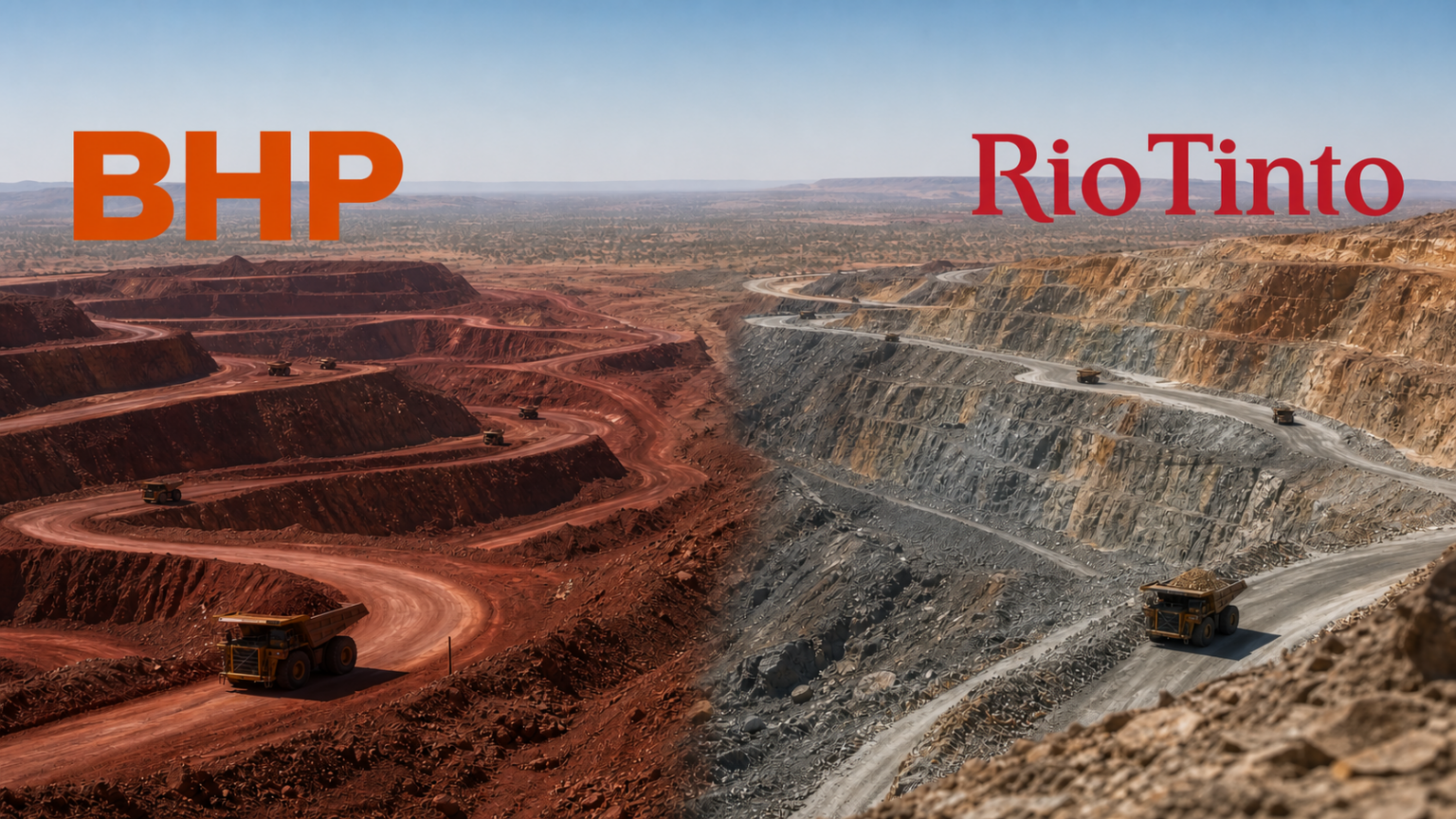
BHP and Rio Tinto still sit near the top of the global mining sector, but they are not interchangeable investments, even if many investors treat them that way at first glance. BHP increasingly looks like the steadier, balance-sheet-driven compounder built around diversification and long-life assets, while Rio Tinto offers more direct leverage to commodity cycles through its stronger exposure to iron ore, copper and aluminium.
That distinction matters more than many investors realise.
The real portfolio question is not which company is objectively “better”, it is which role each business plays inside a diversified portfolio and how much cyclical exposure an investor actually wants over the next few years. In my view, BHP remains the stronger core holding for long-term investors seeking quality resources exposure with lower operational volatility, while Rio Tinto still makes sense as a complementary position for investors wanting more upside sensitivity if commodity markets strengthen again.
BHP and Rio operate differently
At a surface level, both companies provide exposure to large-scale global mining operations, commodity demand and long-duration resource assets, but once you look deeper the operating mix starts to diverge quite meaningfully across the portfolio.
BHP has built a broader earnings base across copper, iron ore and steelmaking coal, which gives the business several profit engines rather than relying too heavily on one single commodity cycle to drive shareholder returns over time. Rio Tinto, meanwhile, still derives a larger share of earnings from iron ore, although it has continued expanding its copper and aluminium footprint while also pushing harder into transition-facing commodities.
That diversification gap matters because mining cycles rarely move perfectly together.
When one commodity weakens, diversified miners can often absorb the pressure through stronger pricing elsewhere in the portfolio, which usually supports earnings resilience, dividend stability and balance-sheet flexibility during more difficult market conditions. Investors sometimes underestimate how important that becomes once commodity prices inevitably cool.
BHP’s operating model still looks stronger
BHP’s latest operating results reinforced why the company continues to attract institutional capital as one of the cleaner large-cap mining exposures globally. The company reported copper production above 2 million tonnes for the first time during FY25, while WA Iron Ore also delivered a production record of roughly 290 million tonnes.
Those numbers matter because they show BHP is not simply relying on legacy iron ore cash flow to maintain relevance. Management is actively repositioning the company toward copper and future-facing commodities while still extracting enormous value from its established Pilbara operations.
The broader strategic narrative is becoming clearer each year.
BHP is effectively using its world-class iron ore business as the financial engine to fund long-duration copper expansion projects that could become significantly more valuable if electrification demand, energy infrastructure spending and global grid investment continue accelerating through the next decade.
That is a strong setup for long-term investors.
The company has also maintained a relatively disciplined approach toward capital allocation compared with many large miners historically, which helps explain why the market often treats BHP as the cleaner “core holding” within the global diversified mining sector.
Rio Tinto is becoming more aggressive on future metals
Rio Tinto is also evolving, although the company’s transition story looks slightly different from BHP’s current path. Rio’s FY2025 results highlighted stronger copper and bauxite production alongside continued efforts to diversify deeper into transition metals, particularly following the Arcadium lithium acquisition.
That acquisition was strategically important. For years, Rio was viewed primarily as an iron ore powerhouse with selective diversification exposure around the edges, but management is now trying to reposition the business more directly into commodities tied to electrification, batteries and energy transition infrastructure.
The opportunity here is obvious. If lithium, copper and aluminium markets strengthen over the medium term, Rio arguably has greater upside torque than BHP because its earnings base remains slightly more concentrated and therefore more sensitive to improving commodity pricing conditions.
The trade-off is volatility. A more concentrated portfolio can produce stronger upside during commodity expansions, but it can also expose investors to sharper earnings swings when iron ore or industrial metals weaken, especially if China’s growth backdrop slows materially.
Balance sheets still separate the two
One of the clearest differences between BHP and Rio right now comes down to balance-sheet flexibility and capital structure positioning through the cycle.
BHP finished its latest half with net debt around US$14.7 billion, remaining comfortably within management’s stated target range while continuing to generate strong operating cash flow from its core assets. The company continues emphasising balance-sheet discipline, which gives it significant optionality during weaker parts of the commodity cycle.
Rio Tinto’s position remains manageable, but leverage has increased more meaningfully following the Arcadium transaction and broader portfolio expansion efforts. Rio ended FY2025 with net debt around US$14.36 billion, which is not problematic in isolation, although it does leave the company with slightly less balance-sheet flexibility than BHP at this stage of the cycle.
That matters more than investors sometimes appreciate. Mining is still an extremely cyclical industry, and the businesses with stronger balance sheets typically retain the ability to continue investing, protect dividends and pursue strategic acquisitions even during periods where commodity prices soften sharply.
Leadership and execution risk
Leadership quality matters enormously in mining because the sector has historically destroyed significant shareholder value through poor capital allocation, overexpansion and badly timed acquisitions during commodity booms.
BHP currently looks like the more stable operator from a governance and execution perspective.
Mike Henry’s leadership team has built a fairly strong reputation around disciplined reinvestment, operational consistency and maintaining focus on commodities with stronger long-term structural demand profiles. Investors generally understand what BHP is trying to become over the next decade.
Rio Tinto feels slightly more transitional. Simon Trott stepped into the CEO role during 2025 following a lengthy leadership process and broader strategic reset across the company. Trott has spoken heavily about productivity improvements, operational execution and unlocking greater value from Rio’s asset base, which suggests management is trying to sharpen performance rather than radically reinvent the company.
There is upside in that approach if execution improves.
Still, from a market-confidence perspective, BHP currently benefits from looking like the more settled operator with the more predictable long-term framework.
Which miner looks stronger over the next 12 months?
| Company | Strengths | Main Risks | What Investors Should Watch |
|---|---|---|---|
| BHP | Diversified earnings, copper growth, stronger balance sheet | Slower upside during commodity rallies | Copper expansion, iron ore pricing, capital returns |
| Rio Tinto | Higher commodity leverage, aluminium and lithium upside | Greater earnings concentration, execution risk | Arcadium integration, copper growth, China demand |
Over the next year, both companies still have credible upside potential, but the drivers will probably differ quite significantly.
BHP’s medium-term story is increasingly tied to copper growth, long-life assets and disciplined reinvestment across future-facing commodities, which gives investors a relatively visible pathway for earnings growth even if iron ore pricing becomes less supportive.
Rio’s upside remains more cyclical.
If commodity markets strengthen materially, particularly iron ore, aluminium and copper, Rio could outperform because of its higher operational leverage and stronger sensitivity to improving pricing conditions across a narrower commodity mix.
That makes Rio potentially more rewarding during strong commodity rallies, although also more volatile if conditions weaken unexpectedly.
Read More

Which one belongs in a portfolio?
If we had to choose only one mining giant for a long-term diversified portfolio, I would still lean toward BHP as the cleaner all-round holding because the company combines stronger diversification, disciplined capital allocation and a more stable operating framework with meaningful exposure to copper growth over time.
Rio Tinto remains attractive, but I view it more as a cyclical satellite holding rather than the first-choice portfolio anchor for conservative long-term investors.
That does not make Rio inferior. In fact, for investors already holding BHP, adding Rio can make a lot of sense because the two businesses provide slightly different commodity exposures and react differently across various stages of the resources cycle.
The simplest way to frame it is probably this, BHP offers more stability and portfolio resilience, while Rio offers more direct leverage if commodity markets run harder than expected over the next few years.
Final view
BHP still looks like the stronger all-round portfolio holding because the business combines scale, diversification, copper growth and capital discipline in a way that is difficult for most global miners to replicate consistently over long periods.
Rio Tinto remains a credible and potentially rewarding companion investment, particularly for investors comfortable with greater commodity-cycle sensitivity and a little more earnings volatility along the way.
Owning both can absolutely work. The key is understanding they serve different purposes inside a portfolio rather than treating them as duplicate mining exposures.