
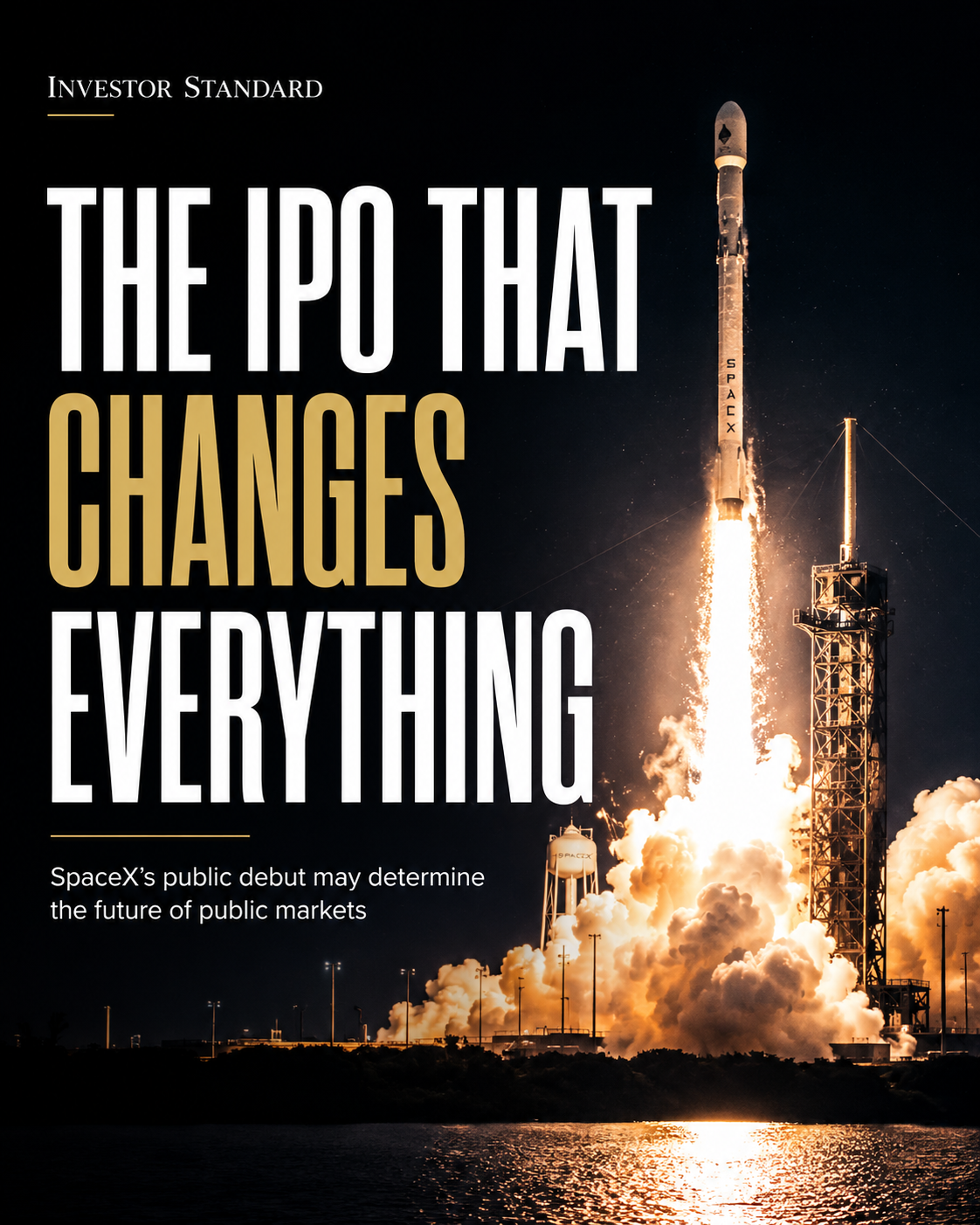
SpaceX will IPO and officially enter public markets on Friday 12th June, completing what is expected to be the largest IPO in history.
At a valuation approaching US$1.8 trillion, the company will immediately rank among the most valuable public companies in the world. What began as an ambitious rocket startup has evolved into a global infrastructure company spanning satellite internet, launch services, defence contracts and communications networks.
The sheer scale of the listing is difficult to comprehend. SpaceX is worth more than the GDP of all but 14 countries and more valuable than nearly every publicly traded company outside the world’s largest technology giants.
Yet the significance of this IPO extends far beyond SpaceX itself.
For more than a decade, the most valuable technology companies increasingly chose to remain private. Venture capital, private equity, private credit and sovereign wealth funds provided enough capital that many firms no longer needed public markets to fund growth.
SpaceX may signal that era is ending.
Its public debut arrives as other technology giants, including OpenAI and Anthropic, explore their own paths to market. Investors are not simply evaluating one company. They are effectively deciding whether public markets are ready to embrace a new generation of trillion-dollar technology businesses.
In that sense, SpaceX’s IPO is not just another listing.
It’s a test case for the future of public markets.
Largest IPO Ever
Every IPO is marketed as a milestone. SpaceX’s debut genuinely is.
For decades, landmark listings such as Google, Meta, Alibaba and Saudi Aramco set the benchmark for what was possible in public markets. Each represented a defining company of its era and attracted enormous investor attention.
SpaceX has entered that conversation immediately.
Its valuation places it among the most valuable companies in the world from day one, exceeding the scale of every public listing that came before it. What was once a niche aerospace company is now worth more than entire industries and many nations stock markets.
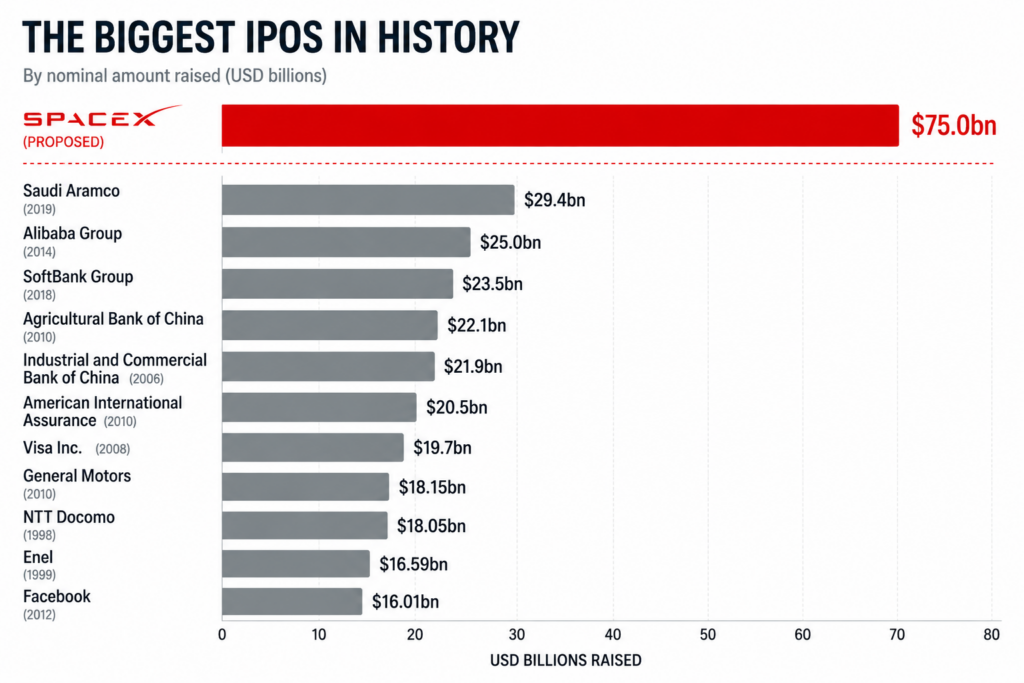
The comparison is important because it highlights how dramatically the relationship between private and public capital has changed.
Historically, companies went public relatively early to raise money for growth. SpaceX has already raised hundreds of billions of dollars privately. By the time public investors received their opportunity to buy shares, much of the value had already been created.
That shift may become one of the defining features of modern markets.
SpaceX is not the first company to stay private for longer, but it may be the clearest example of what happens when a business waits until it has already reached an extraordinary scale before going public.
SpaceX Isn’t A Startup Anymore
For many investors, SpaceX remains synonymous with rockets.
Images of Falcon 9 launches, Starship test flights and ambitious plans to colonise other planets have shaped the public view of the company for over 20 years.
But SpaceX is no longer simply an aerospace business.
Today, it operates one of the world’s largest satellite networks through Starlink, is a competitor in the AI secotr through xAI provides launch services for governments and private companies, and plays an increasingly important role in communications and national security infrastructure.
Starlink has been central to that transformation.
What began as an ambitious effort to provide internet access from space has evolved into a global communications network serving millions of customers across more than 100 countries. In many regions, it offers the only viable high-speed internet connection available.
Meanwhile, the launch business continues to strengthen its position.
SpaceX now dominates the global commercial launch market, carrying satellites, scientific payloads and government missions into orbit at a scale few competitors can match. Its reusable rocket technology has dramatically reduced launch costs and created a competitive advantage that rivals have struggled to replicate.
The result is a company that increasingly resembles infrastructure rather than a traditional tech startup.
People aren’t the only ones using SpaceX’s products. Governments, businesses and consumers are becoming dependent on them.
That distinction helps explain why investors have been willing to support the company at such extraordinary valuations.
Why SpaceX IPO Changes Things
The significance of SpaceX’s public debut extends well beyond the company itself.
For years, public markets have been largely excluded from some of the world’s most valuable and fastest growing tech businesses. Companies that would have listed years or a decade earlier instead remained private longer, funded by venture capital firms, sovereign wealth funds and private investors willing to write ever larger cheques.
As a result, a lot of the value had been created before ordinary investors had an opportunity to participate.
SpaceX may mark the beginning of a reversal.
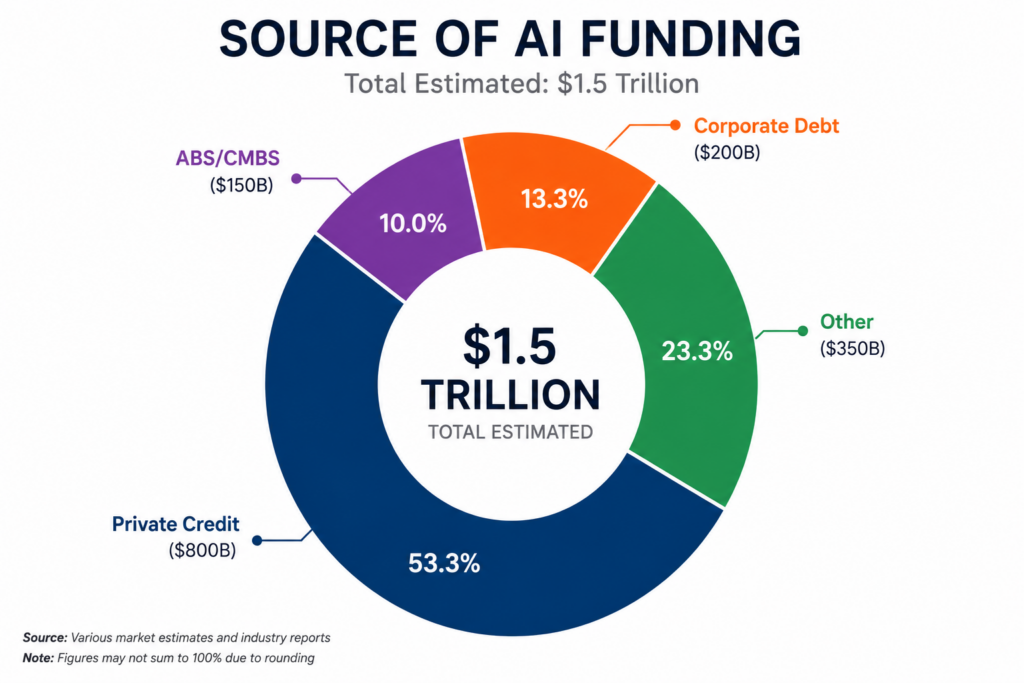
With capital expenditures growing more and more with US$7.7 in just 1 quarter for the xAI arm alone.
Its successful listing demonstrates that public markets remain capable of absorbing companies at valuations previously reserved for private capital. That is a powerful signal for a growing group of firms waiting in the wings.
OpenAI has already filed confidentially for an IPO. Anthropic is reportedly exploring a similar path. Other highly valued private technology companies are watching closely.
The reception received by SpaceX will inevitably influence their decisions.
A strong performance would suggest that investors remain willing to fund ambitious, capital-intensive businesses with long-term growth stories. A disappointing outcome could force future issuers to lower expectations or delay plans altogether.
In that sense, investors are not simply evaluating SpaceX.
They are helping determine the path to market for the next generation of technology giants.
That is why this IPO matters.
It is not the end of a story. It may be the beginning of a new cycle.