
AI is not just transforming technology. It is transforming corporate finance.
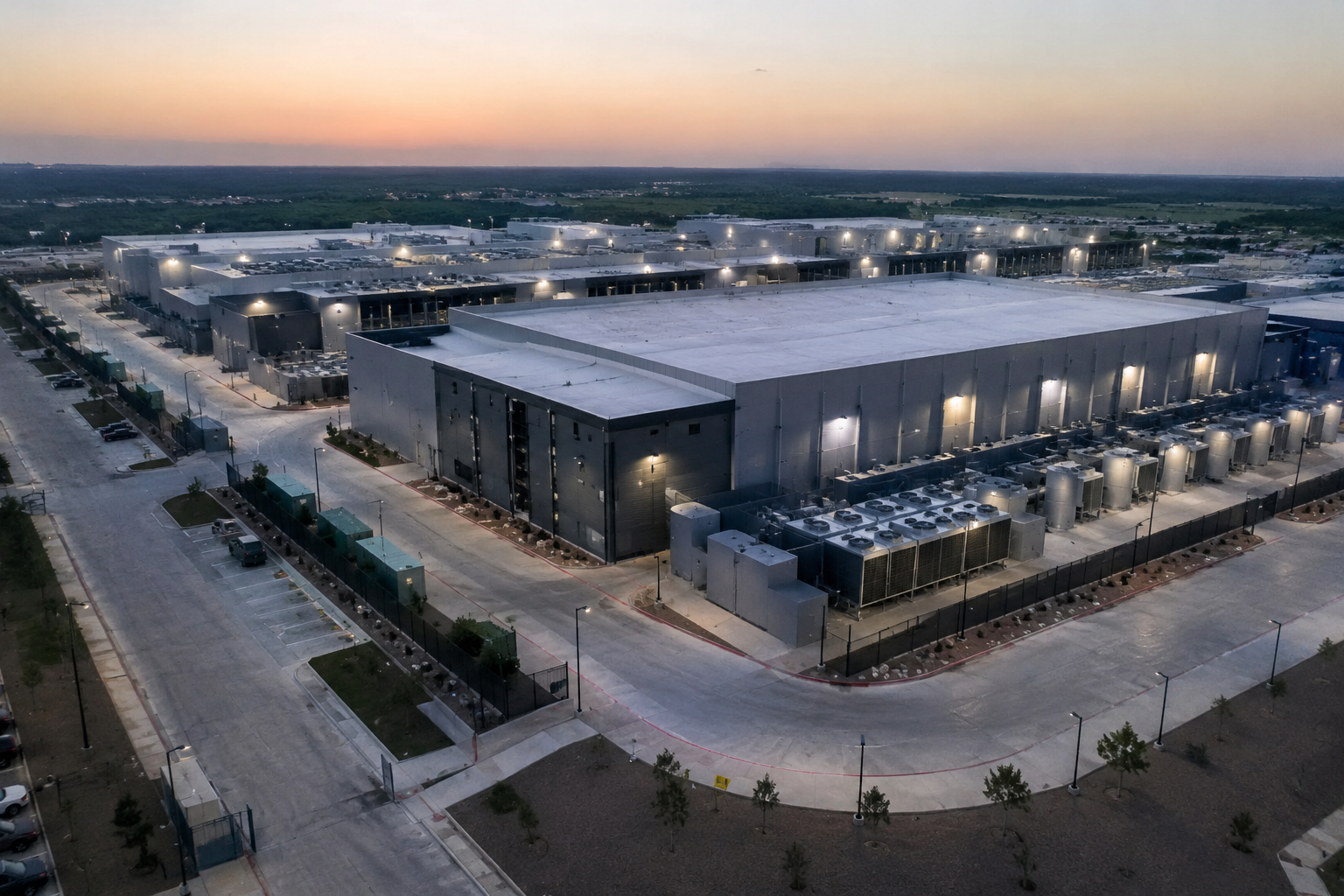
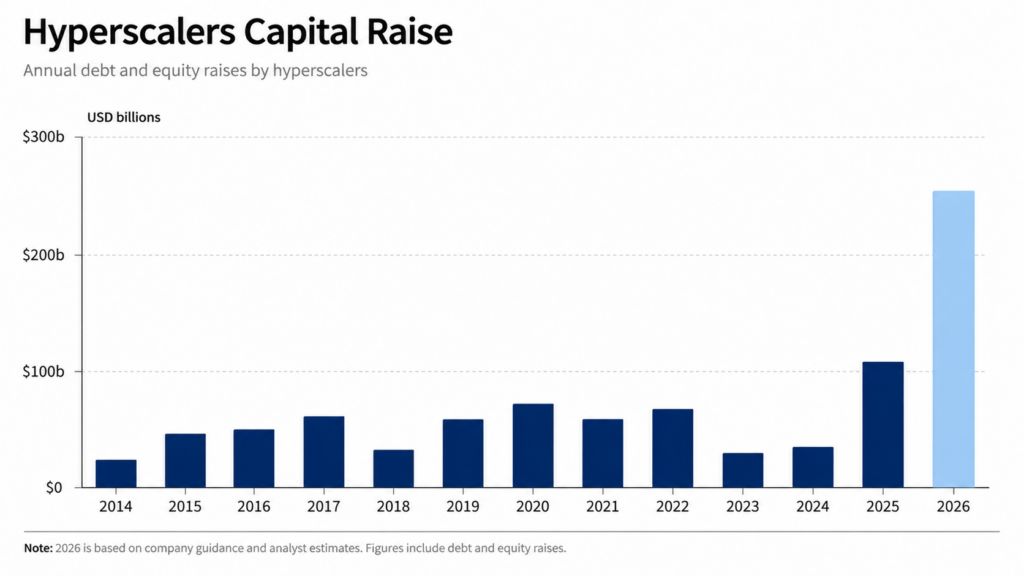
Over the past two years, the world’s largest technology companies have committed hundreds of billions of dollars to building data centres, purchasing advanced semiconductors and expanding the computing infrastructure required to support increasingly powerful AI models. Financing that investment has required one of the largest waves of corporate borrowing in modern history.
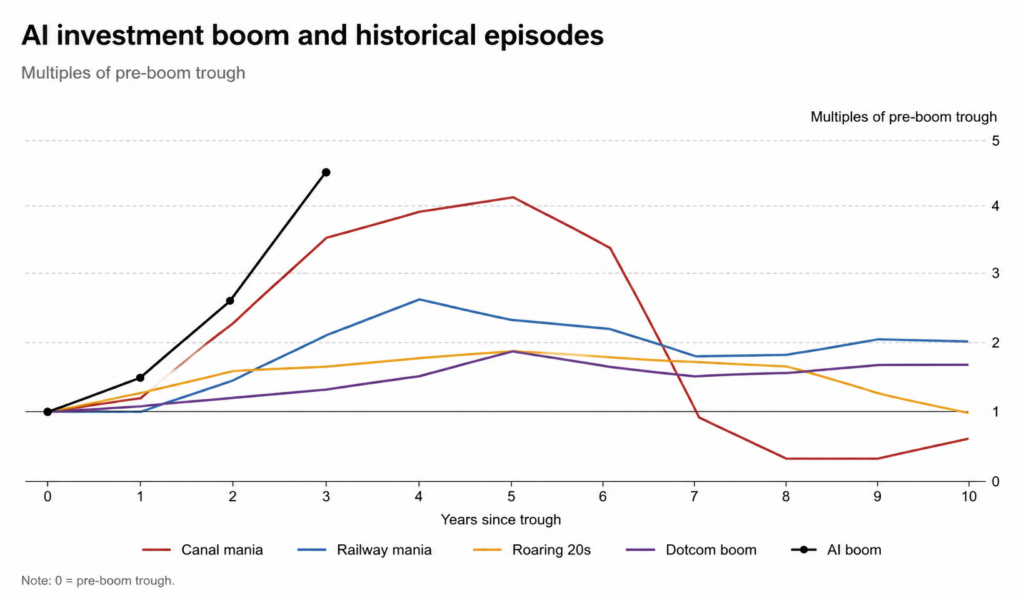
During the first seven months of 2026 alone, U.S. technology companies issued more than US$300 billion of debt, with analysts expecting total issuance to approach US$500 billion by the end of the year. That would account for roughly one-fifth of all corporate debt issued in the United States, exceeding the pace of borrowing seen during previous technology investment booms.
Yet the debt visible on company balance sheets tells only part of the story.
Behind the bonds and bank loans sits a much larger web of long-term purchase agreements, lease commitments and financial guarantees. While these obligations are generally disclosed in financial statements, they often receive far less attention than conventional debt despite representing significant future financial commitments.
As technology companies continue racing to build the infrastructure powering AI, investors are increasingly asking not only how much they are spending, but how those commitments will ultimately be financed.
Source: Axios
Debt Is Only Part Of The Picture
When investors assess a company’s financial health, one of the first places they look is the balance sheet.
Traditional measures such as total debt, net debt and gearing ratios provide an indication of how much a company has borrowed and whether those obligations appear manageable relative to its earnings and cash flow. For decades, these metrics have formed the foundation of corporate credit analysis.
However, not every future financial commitment appears as conventional debt.
Modern technology companies frequently enter into long-term contractual agreements that require them to make substantial future payments without necessarily issuing a traditional bond or bank loan. These commitments can include multi-year purchase agreements for specialised semiconductors, long-term leases for data centres and equipment, as well as financial guarantees supporting third-party infrastructure providers.
Although these obligations are generally disclosed in the notes to financial statements, they often receive far less attention than the liabilities recognised directly on the balance sheet. Yet economically, many of them represent unavoidable future cash outflows that companies have already committed to making.
As AI infrastructure spending accelerates, these contractual commitments have grown rapidly, becoming an increasingly important part of how major technology companies finance their expansion.
Source: Bank for International Settlements
Long-Term Purchase Agreements
One of the most significant commitments created by the AI boom comes through long-term purchase agreements.
Rather than borrowing money today to purchase equipment immediately, companies often sign legally binding contracts committing them to buy products or services years into the future. These agreements allow suppliers to confidently expand production while guaranteeing customers access to critical infrastructure such as advanced AI chips.
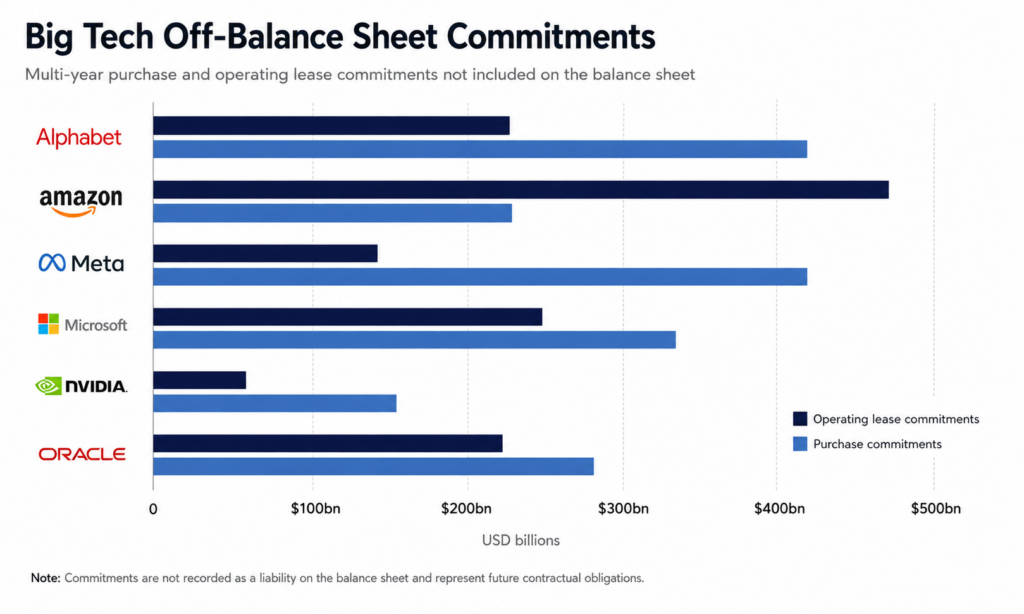
Nvidia provides one of the clearest examples. To secure manufacturing capacity for its increasingly sophisticated processors, the company has entered into tens of billions of dollars of non-cancellable purchase commitments with manufacturing partners such as TSMC. Those agreements ensure Nvidia can continue meeting surging demand, but they also represent future payments the company has already committed to making.
From an accounting perspective, these commitments are generally not recognised as traditional financial debt because no money has yet been borrowed. Economically, however, they still represent contractual obligations that cannot easily be avoided.
As AI infrastructure spending accelerates, purchase agreements have become an increasingly important financing tool. Instead of raising all the required capital upfront, companies commit to paying suppliers over time, effectively locking in years of future expenditure before a single chip has even been delivered.
Leasing The AI Revolution
Purchase agreements are only one way technology companies are financing the AI boom.
Increasingly, companies are also relying on long-term lease arrangements to secure the enormous computing infrastructure required to power AI.
Consider a company that wants to build a US$10 billion data centre. One option is to borrow the money itself, construct the facility and record both the asset and the associated debt on its balance sheet.
Another option is for a third party to finance and build the data centre instead. The technology company then signs a long-term lease, agreeing to make regular payments over many years in exchange for using the facility.
From an operational perspective, the outcome is almost identical. The company still gains access to the computing capacity it needs, and it remains committed to making years of future payments. The difference lies in how the financing is structured.
Source: Bank for International Settlements
Rather than raising a large amount of debt upfront, the financial obligation is spread across future lease payments. While these commitments are generally disclosed in financial statements, they often attract far less attention than conventional borrowing despite representing significant long-term cash outflows.
As AI infrastructure has expanded, these arrangements have become increasingly common. Instead of owning every data centre outright, many technology companies are choosing to lease facilities financed and constructed by specialist infrastructure providers, allowing them to expand more rapidly while preserving flexibility over how capital is deployed.
Oracle illustrates the scale of these commitments. The company has accumulated hundreds of billions of dollars in future lease obligations as it rapidly expands its cloud and AI infrastructure, commitments that have become an increasingly important consideration for investors and credit rating agencies assessing the company’s financial position.
Why Does It Matter?
None of this necessarily means the AI boom is built on unsustainable foundations.
Many of the world’s largest technology companies remain exceptionally profitable, generating tens of billions of dollars in annual operating cash flow and maintaining some of the strongest balance sheets in corporate America. For companies such as Microsoft, Alphabet and Meta, many of these future commitments remain well within their financial capacity.
The significance lies elsewhere.
Unlike discretionary capital expenditure, contractual commitments cannot easily be abandoned if economic conditions deteriorate. Once a company has signed a long-term purchase agreement or committed to leasing infrastructure for the next decade, those payments must generally continue regardless of whether demand meets expectations.
That increases the financial risk of large-scale investment programmes. If AI continues delivering rapid growth, these commitments may prove to be prudent investments that generate substantial long-term returns. However, if demand grows more slowly than expected, companies could find themselves supporting billions of dollars of infrastructure that has already been contracted but generates lower-than-anticipated returns.
The distinction is particularly important because the AI race has become highly competitive. Every major technology company is investing aggressively to avoid falling behind, meaning many are making long-term commitments before the eventual size of the market is fully known.
For investors, that shifts the focus beyond headline capital expenditure. Understanding the scale of future contractual obligations provides a more complete picture of how much financial capacity has already been committed to the AI race and how much flexibility companies will retain if market conditions change.
Not All Companies Face The Same Risks
It is important to recognise that these commitments are not inherently problematic, nor are they equally risky across the technology sector.
Companies such as Microsoft, Alphabet and Meta generate enormous operating cash flows from diversified businesses that extend well beyond AI. Their scale, profitability and access to capital markets provide significant capacity to absorb large future commitments while continuing to invest elsewhere.
The picture is less straightforward for more heavily leveraged companies or those whose growth depends more directly on continued AI investment. Oracle, for example, has rapidly expanded both its capital expenditure and long-term infrastructure commitments as it seeks to establish itself as a leading provider of AI cloud services. That combination of aggressive investment and rising financial commitments has attracted increasing scrutiny from investors and credit rating agencies.
Ultimately, the question is not whether companies are taking on obligations, but whether the returns generated by those investments will justify the capital committed over the coming decade.
The Bigger Picture
AI is likely to remain one of the defining investment themes of this decade, requiring an unprecedented build-out of data centres, semiconductor manufacturing capacity and supporting infrastructure. That expansion will inevitably require enormous amounts of capital.
Much of the discussion has focused on the billions of dollars technology companies have borrowed and the record levels of capital expenditure they continue to announce. Yet the balance sheet captures only part of that story.
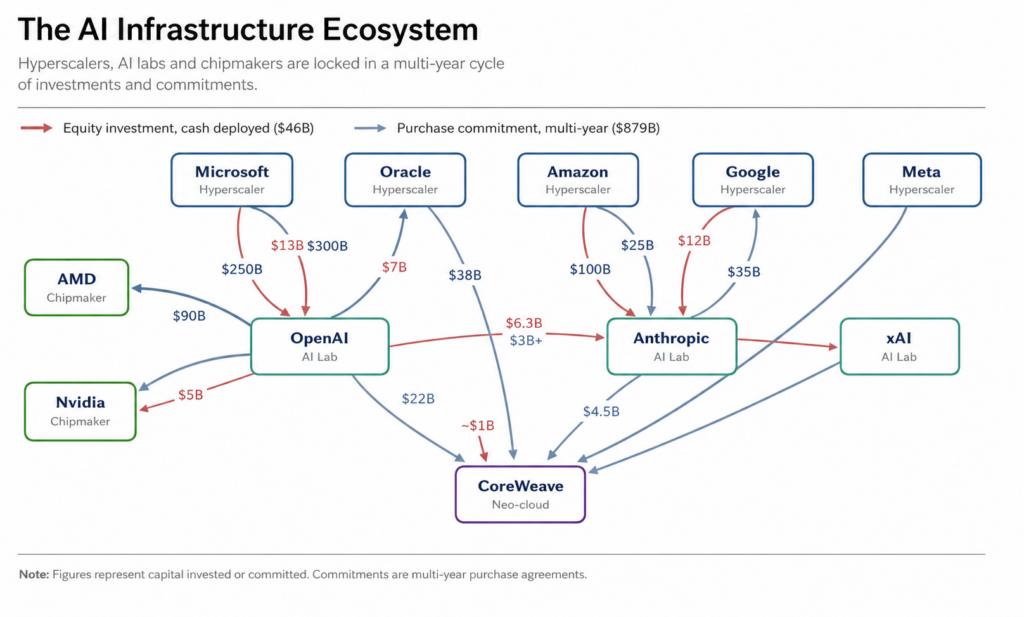
Beyond conventional debt lies an even larger network of contractual commitments, lease obligations and future purchase agreements that together represent hundreds of billions—if not trillions—of dollars in promised future spending. These commitments are not hidden from investors, but they are often overshadowed by more familiar measures such as net debt and capital expenditure.
For now, the market appears comfortable funding that investment, reflecting widespread confidence that AI will generate substantial long-term returns. But as the AI race matures, investors are likely to look beyond headline spending figures and place increasing emphasis on how that investment is financed, how much flexibility companies retain, and ultimately whether the returns justify the commitments that have already been made.