
The United States just lost jobs. Wall Street celebrated.
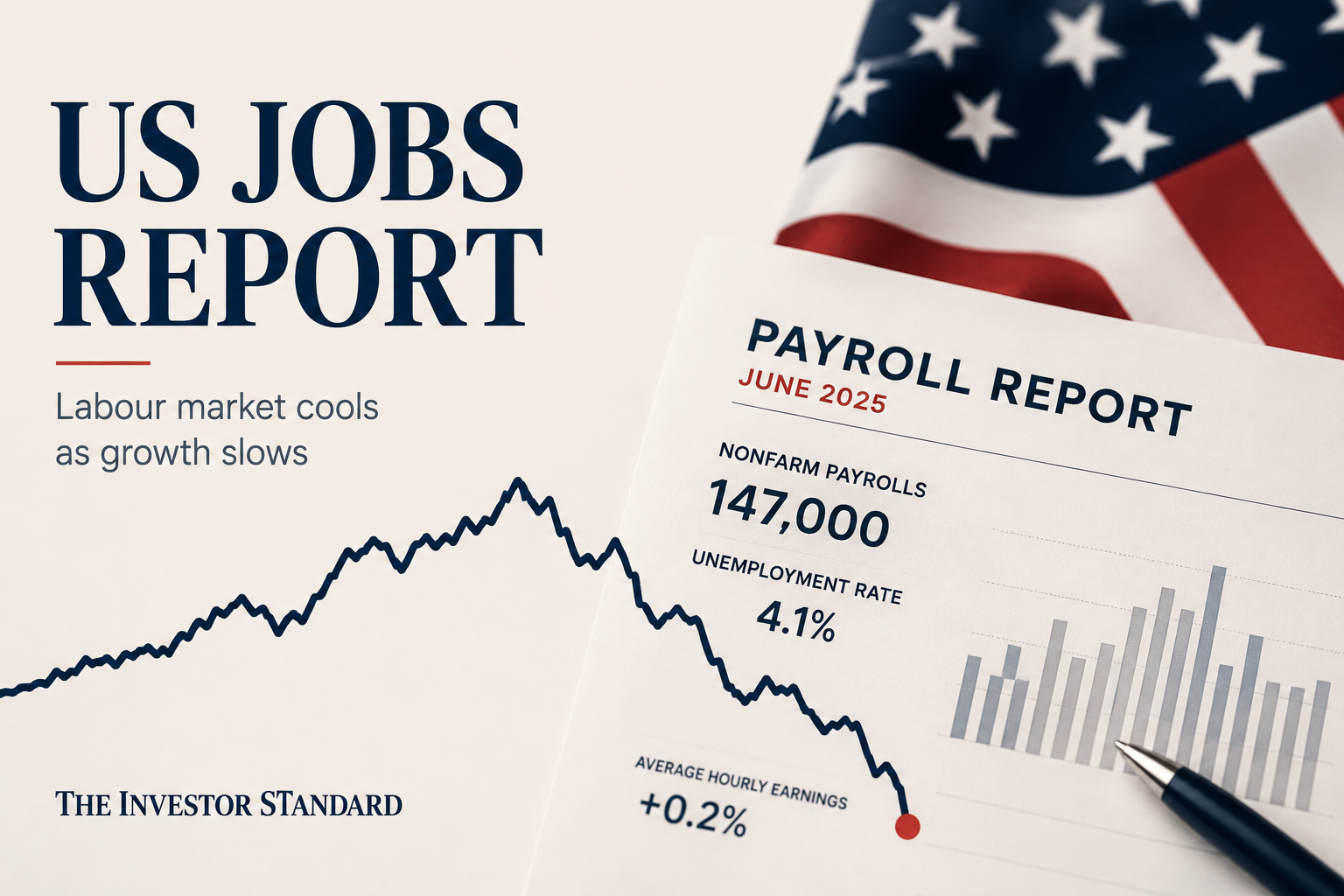
Friday’s jobs report saw the economy unexpectedly lose 23,000 jobs in July, dramatically undershooting economists’ expectations for an increase of around 83,000. Previous estimates for May and June were also revised down by a combined 103,000 jobs, adding to evidence that America’s previously resilient labour market is beginning to weaken.
Normally, that would hardly be cause for celebration.
Yet the S&P 500 climbed 0.6% to a record 7,757.64 on Friday, while the Nasdaq Composite jumped 1.3% and the Dow Jones Industrial Average gained 0.3%. Smaller companies joined the rally, with the Russell 2000 advancing 1.1%.
The bond market moved in the same direction. The yield on the benchmark 10-year Treasury fell to around 4.64%, reversing some of the increase that had recently weighed on equity valuations.
The reason lies not in the jobs themselves, but in how they make affect interest rates, pointing to a potential near future cut.
Only days earlier, investors were grappling with the possibility that persistent inflation could force the Fed to raise rates again. Friday’s employment report complicated that argument considerably.
Following the release, markets reduced the implied probability of a September rate increase to around 44%, down from 55% immediately beforehand.
For Wall Street, bad economic news had suddenly become good news again.
A Labour Market Losing Momentum
The headline payroll number was weak, but the details provided an equally important signal.
The unemployment rate actually edged down to 4.1%, which seems to contradict the fall in the number of jobs in the jobs report. However, that improvement partly reflected fewer Americans participating in the labour force rather than an acceleration in hiring.
More concerning were the revisions to previous months.
Combined with July’s outright decline of 23,000, they suggest the deterioration in employment has been developing for longer than previously thought and may not just be a temporary blunder. The result was a substantially weaker picture of the US labour market than investors had been thinking and working with only days earlier.
That matters because the Fed is currently balancing two increasingly conflicting risks.
Inflation remains well above target. June’s preferred PCE measure was running at 3.7%, keeping pressure on policymakers to restrain price growth. At the same time, tighter monetary policy puts further pressure on a labour market that is already declining and weakening.
Friday’s report shifted that balance.
The question facing the Fed is no longer simply whether inflation remains too high to tolerate. Policymakers must increasingly consider whether to tackle inflation or employment first. Another rate increase designed to bring inflation down to target could accelerate deterioration elsewhere in the economy and in this case in the labour market.
Why Stocks Went Up
For equity investors, that change in the interest-rate outlook matters enormously.
Higher interest rates increase borrowing costs for businesses and consumers and simultaneously raises the discount rate applied to future earnings. The effect is particularly pronounced for tech and other growth companies whose valuations depend heavily on earnings and cash flows expected years into the future.
Friday delivered the opposite.
Weaker employment reduced expectations for further monetary tightening and rate hikes, Treasury yields declined and investors became willing to pay more for those future earnings as it helps the Equity Risk Premium.
The composition of the rally reflected that dynamic. The technology-heavy Nasdaq gained 1.3%, more than twice the S&P 500’s advance of 0.6%, while the rally itself was relatively broad: eight of the S&P 500’s 11 sectors finished higher and roughly two-thirds of its constituents advanced.
It was also a reversal of the market’s reaction to stronger employment data earlier this year. In May, payroll growth substantially exceeded expectations and Treasury yields subsequently jumped as investors increased bets on tighter monetary policy. What was good news for the economy became bad news for asset prices.
Friday effectively delivered the mirror image.
But falling rate expectations were not the only thing supporting stocks. Corporate earnings remained strong, several individual technology companies rallied following results, and improving hopes around diplomacy in the Strait of Hormuz provided another tailwind to sentiment.
The jobs report was nevertheless the catalyst that changed the day’s interest-rate calculation.
When Bad News Stops Being Good News
There is an obvious problem with celebrating a deteriorating labour market.
The market’s reaction depends on economic weakness remaining within a relatively narrow range.
Investors currently appear willing to tolerate softer employment because it reduces the probability of another rate increase without yet providing definitive evidence that the US economy is in danger of a recession or chronic sluggish growth.
If employment continues deteriorating, that calculation changes.
Lower interest rates can support valuations, but they cannot indefinitely compensate for falling earnings, weaker consumer spending or a significant economic contraction. At some point, bad economic news also becomes bad news for Wall Street.
Nor has Friday’s report eliminated the possibility of another rate increase. Several Fed officials continue to argue that persistent inflation could require further tightening, while other economists believe the next move could ultimately be a cut. Markets have reduced the probability of a September hike, not removed it altogether.
That leaves investors caught between two risks: an economy strong enough to keep inflation elevated, and one weak enough to undermine corporate earnings.
For the moment, markets believe the United States is somewhere in between.
What Comes Next
Friday’s rally leaves the S&P 500 at another record and caps a strong week for U.S. equities. The index gained 3.6% over the week, while the Nasdaq rose 5.2% and the Dow added 3%.
But the employment report has not settled the debate over interest rates.
Attention now shifts back to inflation. The next consumer-price report will provide investors with another indication of whether weakening employment is being accompanied by cooling price pressures or whether the Federal Reserve remains trapped between persistent inflation and a slowing labour market.
For investors, the ideal outcome is increasingly clear: an economy weak enough to keep the Fed from raising rates, but strong enough to keep corporate profits growing.
Friday’s jobs report moved the market closer to the first half of that equation.
Whether America can deliver the second will determine how long Wall Street can continue celebrating bad news.